
Choosing a new garage door is a significant investment in your property's value, security, and energy efficiency. The right garage door style can dramatically enhance curb appeal for a home, or improve operational workflow for a business. For property owners in Texas and Oklahoma, it's a decision that must also account for intense weather, from scorching sun to high winds.
According to industry reports, a garage door replacement can recoup over 100% of its cost at resale, making it one of the most valuable home improvement projects. This guide provides the data-driven insights and practical tips you need to select the perfect style for your residential or commercial property.
How to Choose the Right Garage Door Style
Finding the right garage door requires balancing aesthetics with performance metrics. For Texas and Oklahoma properties, this means selecting a style that complements the architecture while providing robust protection against harsh weather. This decision directly impacts energy consumption, maintenance costs, and long-term durability.
This focus on performance and quality is a global trend. The garage door market was valued at USD 4.3 billion in 2023 and is projected to reach nearly USD 6.9 billion by 2032. The primary drivers are new construction standards and a growing demand for energy-efficient, technologically advanced doors. For a deeper analysis, you can review the full report on the global garage door market.
Key Factors for Your Decision
Before selecting a style, analyze these critical performance factors:
- Curb Appeal and ROI: A garage door can constitute up to 40% of a home's facade. Its style is a dominant visual element that significantly influences market value and buyer perception.
- Insulation (R-Value): In a climate with extreme temperature swings, insulation is non-negotiable. A higher R-value indicates better thermal resistance. An insulated door minimizes heat transfer, which can lower HVAC costs by preventing your conditioned air from escaping and outside air from intruding.
- Material Durability & Wind Load: The door material must withstand local weather challenges. High-gauge steel offers superior impact resistance against hail, while modern composites resist warping from UV exposure. For both residential and commercial properties, checking the door's wind load rating is crucial for compliance with local building codes.
This infographic summarizes the key considerations when evaluating your options.
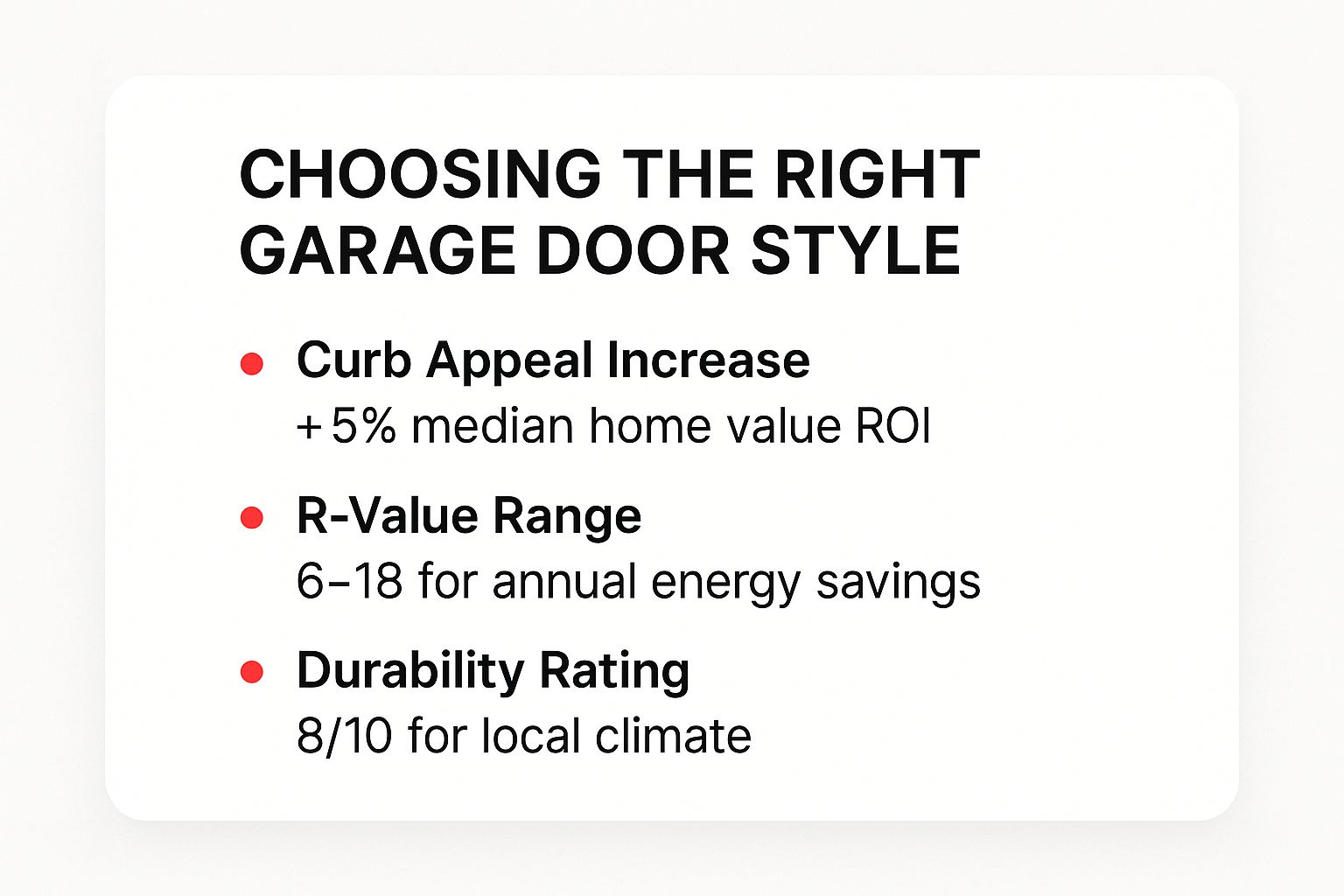
A strategic garage door choice provides tangible returns through increased property value, lower energy bills, and long-term durability. By focusing on these metrics, you can confidently explore the wide range of residential garage doors and find a solution that performs.
Exploring Popular Residential Garage Door Styles
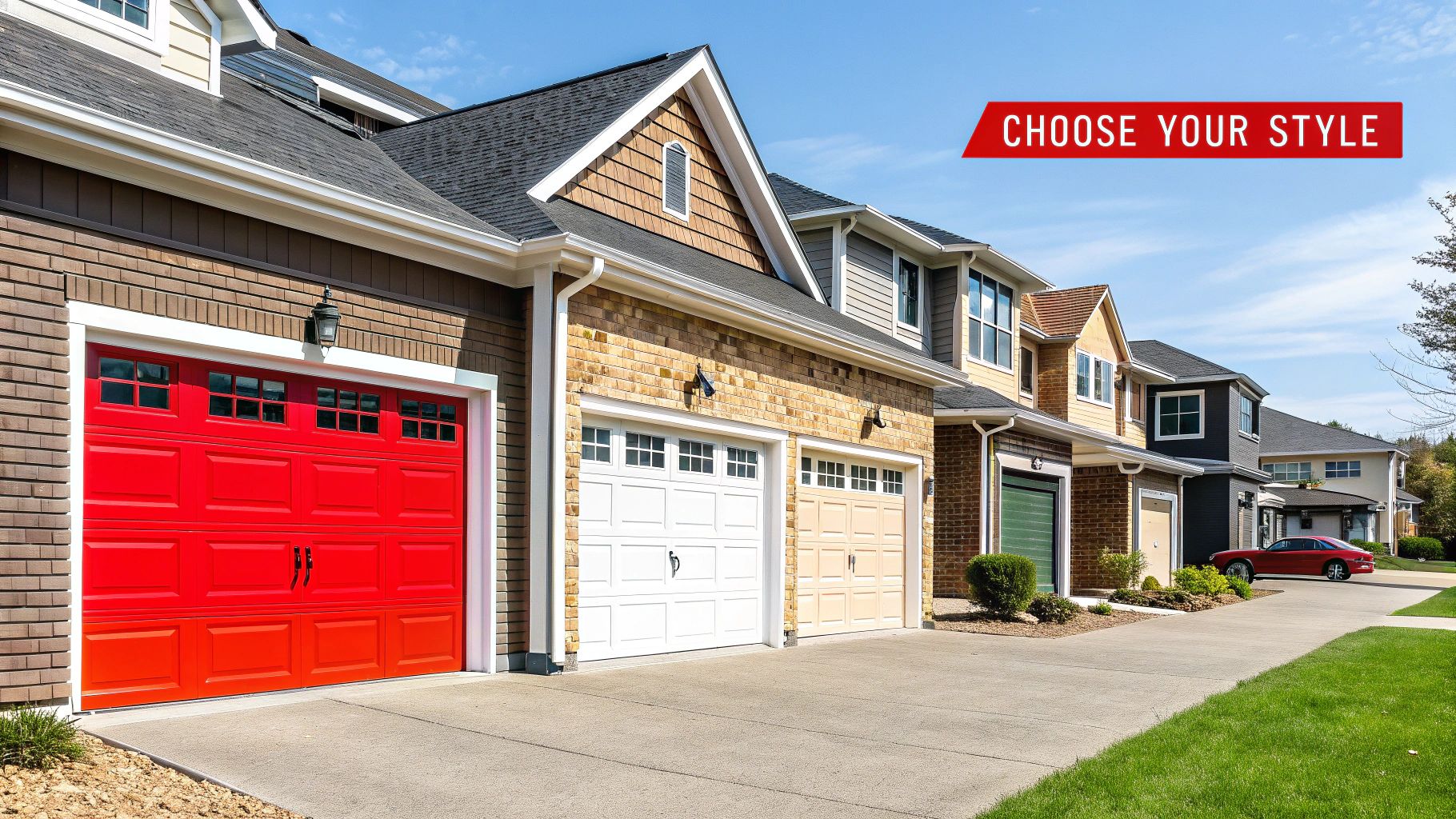
A garage door is a key architectural feature that defines your home's character. The right style should integrate seamlessly with your existing design, enhancing its overall aesthetic. Let's examine the most prevalent residential garage door styles seen across Texas and Oklahoma to help you identify the best fit for your home.
Classic Traditional Raised-Panel Doors
The traditional raised-panel door is the quintessential choice for classic American architecture. Its defining feature is a symmetrical pattern of rectangular panels with beveled edges, creating an elegant, dimensional look.
This design’s enduring popularity stems from its versatility. It complements a wide range of home styles, from colonial revivals to the brick ranch homes common throughout the Texoma region. For homeowners who prioritize a timeless aesthetic over fleeting trends, the traditional style is a reliable and proven choice.
Rustic Carriage House Doors
Inspired by the historic doors of carriage houses, this style brings rustic charm and old-world elegance to a home's exterior. Key features include crossbuck (X-shaped) or V-buck overlays, large decorative hardware, and a handcrafted appearance. These elements combine to create a substantial, welcoming entrance.
Actionable Tip: While original carriage doors swung outward, modern versions are sectional doors that roll up vertically. This design provides the authentic historical aesthetic without sacrificing driveway space, blending classic form with modern function.
This style is an excellent match for:
- Farmhouse and ranch-style homes, where it complements the rustic, agricultural aesthetic.
- Tudor and Craftsman architecture, enhancing their detailed and historic character.
- Any home seeking a warm, inviting, and distinguished curb appeal.
Sleek Contemporary Doors
Contemporary garage doors are defined by minimalism and clean lines. They eliminate ornate details in favor of a smooth, streamlined aesthetic that emphasizes simplicity and sophistication. These doors often feature flush (flat) panels, geometric window arrangements, and modern materials like aluminum and glass.
Full-view glass panels are a popular feature, allowing natural light to illuminate the garage. For privacy, homeowners can opt for frosted, tinted, or obscure glass, which provides light without sacrificing seclusion. This style is the ideal complement to modern and mid-century modern architecture, providing a crisp, uncluttered look that aligns with top home design trends.
Timeless Craftsman Doors
The Craftsman style emphasizes honest materials, quality workmanship, and a connection to nature. Similar to the architectural movement it represents, a Craftsman garage door features clean lines with a warmer, more grounded feel than contemporary designs. Many models use durable, low-maintenance steel or composite materials with overlays that mimic authentic wood construction.
Key design elements include:
- Simple, square window panes, typically arranged across the top section.
- Vertical mullions that create the appearance of classic wood joinery.
- Earthy color palettes, including deep browns, greens, and grays, that integrate well with natural surroundings.
This style pairs perfectly with bungalows, prairie-style homes, and any architecture that prioritizes natural materials and understated elegance. Viewing a garage door style gallery is an effective way to see how these designs look on real homes in our area.
Finding the Best Commercial Garage Door Solutions
While residential door selection often prioritizes curb appeal, commercial door specification is driven by performance, security, and compliance. For any business—from a large distribution center in Dallas to an auto shop in Oklahoma City—a commercial garage door is a critical piece of operational equipment. It directly impacts workflow efficiency, security protocols, and energy costs.
Choosing the right commercial solution requires analyzing key operational metrics. These include the anticipated daily cycle count (the number of times the door opens and closes), specific security requirements, and compliance with industry safety standards like UL 325 for commercial door operators. The optimal door for a climate-controlled warehouse is fundamentally different from one designed for a high-security facility.
Sectional Steel Doors: The All-Around Workhorse
Sectional steel doors are the most widely specified commercial doors due to their versatility and durability. They operate like residential sectional doors but are engineered with commercial-grade materials to withstand high-cycle applications and harsh industrial environments.
Their adaptability makes them suitable for numerous applications:
- Warehouses and loading docks
- Fire stations and municipal buildings
- Automotive service and repair facilities
Customization is a key advantage. These doors are available with varying levels of insulation (R-value), optional windows (lites) for visibility, and heavy-duty hardware for extended service life. A well-insulated sectional steel door can significantly reduce heating and cooling costs, a critical benefit during Texas summers and Oklahoma winters.
Rolling Steel Doors: Maximum Security and Durability
When security and durability are the primary objectives, rolling steel doors are the industry benchmark. Constructed from interlocking steel slats that coil into a compact drum, this design offers superior strength and resistance to forced entry and extreme weather.
Their compact coiling mechanism makes them ideal for applications with limited headroom or clearance. You will find them in high-traffic and high-security environments where space optimization and robust protection are essential.
Industry Standard: A critical specification for these doors is the wind load rating. In storm-prone regions across Texas and Oklahoma, selecting a rolling door certified to meet local building codes for wind resistance is not just recommended—it's often a legal requirement to ensure asset protection.
Their rugged construction makes them ideal for:
- Self-storage facilities
- Parking garages and secure access points
- Industrial plants and retail storefronts
High-Speed Fabric Doors: The Efficiency Experts
In facilities where speed is critical, high-speed fabric doors provide unparalleled performance. These doors can operate at speeds of up to 100 inches per second, minimizing air exchange between different environments. This makes them essential for climate-controlled spaces like refrigerated warehouses, food processing plants, and pharmaceutical clean rooms.
Constructed from tear-resistant vinyl or rubber, they are designed for high-cycle environments. A key feature is their "breakaway" bottom bar. If accidentally impacted by a forklift, the door panel releases from its guides, preventing costly damage. The door can be reset in minutes, virtually eliminating the operational downtime associated with conventional door repairs.
Selecting the right solution from these distinct commercial door services is a strategic decision that enhances operational efficiency, security, and safety.
Selecting Materials for Durability and Performance
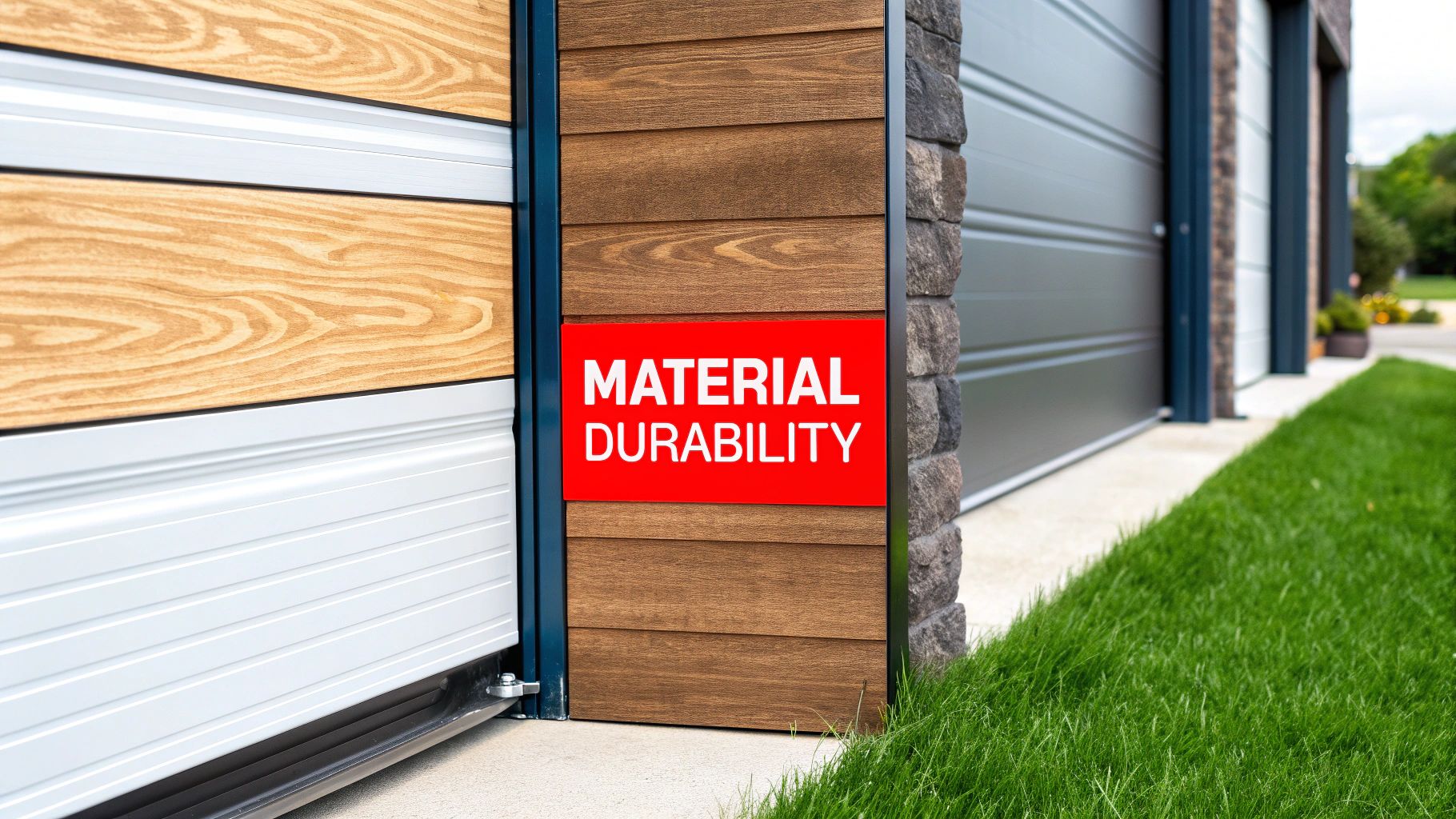
While style dictates appearance, the door's material determines its long-term performance, maintenance requirements, and resilience. In Texas and Oklahoma, where weather includes intense UV radiation, high humidity, and hailstorms, selecting the right material is your primary defense against the elements. The goal is to find the optimal balance of strength, maintenance, and budget.
Steel: The Gold Standard for Strength
Steel is the most popular garage door material due to its exceptional durability, security, and value. However, not all steel doors are created equal. The key performance indicator for steel is its gauge.
A lower gauge number signifies thicker, more durable steel. For example, a 24-gauge door offers significantly more dent resistance than a thinner 27- or 28-gauge door. For properties in the hail-prone regions of North Texas and Oklahoma, investing in a lower-gauge steel door can prevent costly damage and extend the door's lifespan.
Data Insight: The global garage door market, valued at USD 20.92 billion in 2023, reflects the strong consumer preference for durable and technologically advanced materials like multi-layered steel. You can learn more about these garage door market trends.
Aluminum: Lightweight and Corrosion-Resistant
Aluminum’s primary advantage is its high strength-to-weight ratio. Its lighter weight reduces long-term strain on springs and openers. Furthermore, aluminum is naturally resistant to rust and corrosion, making it an excellent choice for humid environments.
While historically less dent-resistant than steel, modern aluminum doors often feature reinforced frames and thicker extrusions for improved rigidity. Aluminum is frequently used for contemporary full-view doors, as its light weight can support large glass panels without overburdening the operating system.
Wood: Unmatched Natural Beauty
Real wood offers unparalleled warmth and classic aesthetic appeal. Materials like cedar, hemlock, and mahogany provide a distinct, high-end look that other materials can only imitate. Wood is also a natural insulator and can be customized with intricate designs and finishes.
However, this beauty requires a commitment to regular maintenance. Wood doors must be sanded and re-stained or painted every few years to protect them from moisture, UV degradation, and pests. For property owners willing to perform the upkeep, the exceptional curb appeal is a significant reward.
Fiberglass and Composite: The Low-Maintenance Champions
For homeowners who desire the look of wood without the associated maintenance, fiberglass and composite doors are the ideal solution. These materials are engineered to perform in harsh climates. Most are constructed with a steel core for strength and feature a fiberglass or composite overlay that realistically mimics wood grain textures.
This hybrid construction delivers multiple benefits:
- Warp and Crack Resistance: Unlike wood, these engineered materials will not swell, rot, or crack under intense sun and humidity.
- Dent Resistance: Fiberglass is often more resistant to dents and dings from everyday impacts than non-insulated steel.
- Low Maintenance: These materials do not require painting or staining and can be cleaned easily, offering a durable and attractive long-term solution.
A professional can help you evaluate these options and plan a garage door installation that meets your property's specific needs.
Making Your Garage Door Smarter and More Efficient
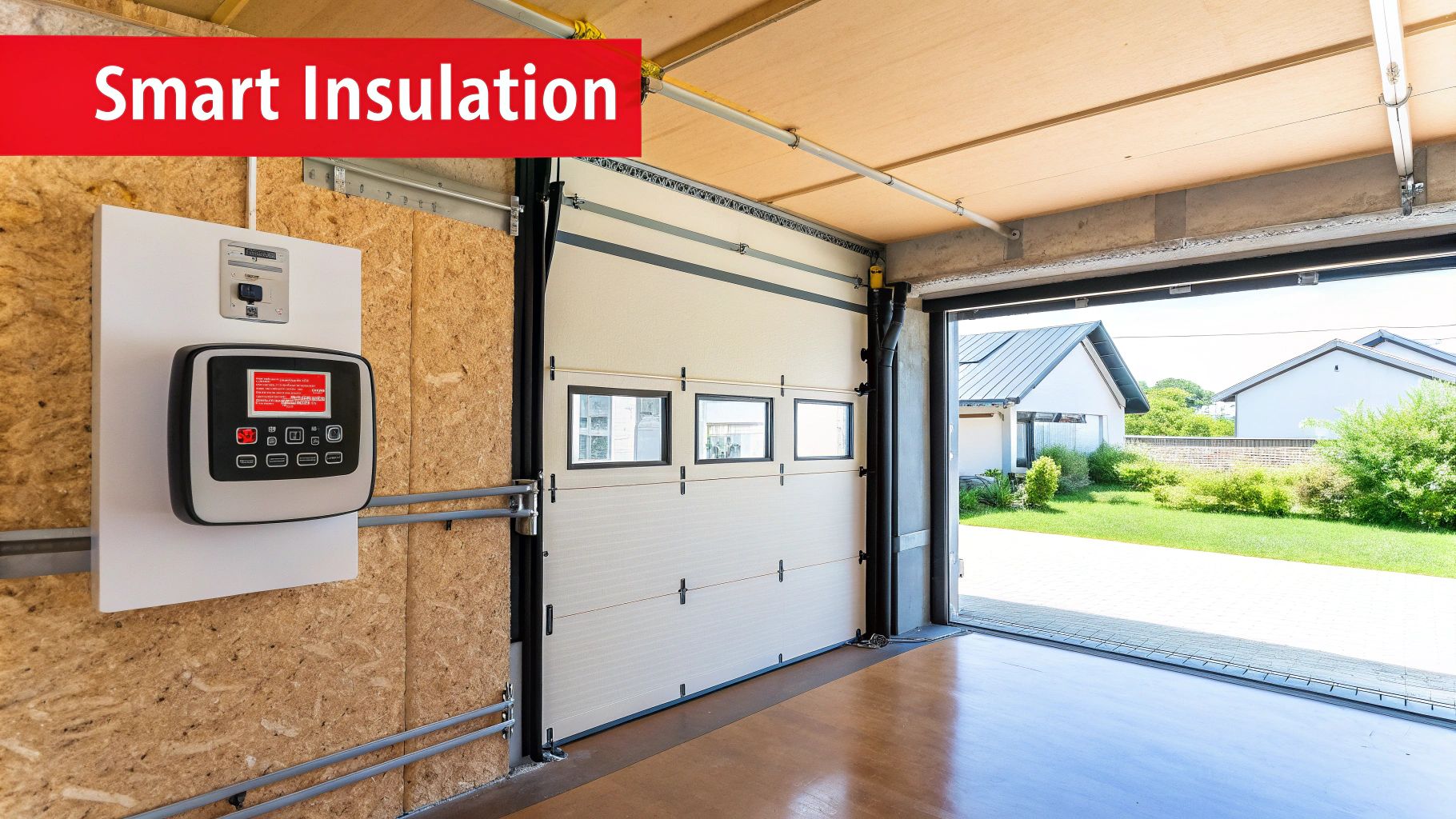
Today's garage door is an integrated component of a property’s security and energy management system. By leveraging modern insulation and smart technology, a garage door can be transformed from a potential vulnerability into a high-performance asset. Understanding how these features deliver tangible benefits is key to making a wise investment.
Finally Understanding Insulation and R-Value
R-value is a measurement of thermal resistance—the higher the R-value, the better the material's insulating properties. For a large surface area like a garage door, a high R-value is crucial for energy efficiency.
An uninsulated garage door acts as a major point of thermal transfer. On a hot Texas day, it absorbs solar radiation and heats your garage, increasing the load on your home's HVAC system. In winter, it allows conditioned air to escape. A door with polyurethane or polystyrene insulation creates a thermal break, significantly reducing this energy transfer.
A garage with a well-insulated door can remain 10-20 degrees closer to ambient home temperature. This not only makes the space more comfortable but can also lead to measurable reductions in monthly energy costs.
This principle of thermal resistance is fundamental to building science and is also applied in high-performance building components like advanced skylight insulation solutions.
The New Wave of Smart Garage Door Technology
Smart technology has revolutionized how we interact with and secure our garages. Modern openers with integrated Wi-Fi connect your door to your smartphone, offering unprecedented control and peace of mind.
These features provide practical solutions to everyday problems:
- Wi-Fi Connectivity: Remotely monitor your door's status (open or closed) and operate it from anywhere via a mobile app.
- Scheduled Closures: Program the door to close automatically at a set time, ensuring your home is secure every night.
- Delivery Integration: Grant secure, temporary access for package deliveries, protecting them from theft and weather. Amazon Key In-Garage Delivery is a prime example of this technology in action.
- Security Alerts: Receive real-time smartphone notifications whenever the door is operated, creating a log of all access events.
Combining these smart features with modern, quiet belt-drive operators and integrated LED lighting creates a seamless and secure user experience. Explore the latest garage door openers and accessories to find a system that aligns with your security and lifestyle needs.
Your Garage Door Questions, Answered
Selecting a garage door involves practical questions about value, aesthetics, and long-term performance. Here are clear, data-backed answers to the most common questions from property owners in Texas and Oklahoma to help you make an informed decision.
What Garage Door Style Adds the Most Value to a Home?
Industry data consistently shows that a garage door replacement offers one of the highest returns on investment (ROI) of any home improvement project, often recouping over 100% of its cost upon resale.
While any new, high-quality door enhances value, carriage house styles frequently provide the greatest boost to curb appeal. Their timeless, high-end aesthetic gives a home a custom look that resonates strongly with potential buyers. When specified in a low-maintenance material like insulated steel or composite, they offer the perfect combination of classic design and modern performance.
How Do I Match a Garage Door Color to My Home?
Choosing the right color creates a harmonious, intentional design. The goal is to select a color that complements your home’s existing materials and architectural style.
Follow these professional design principles:
- For Brick Homes: Select a color that matches either the mortar or a secondary tone within the brick. Dark brown, charcoal, or taupe often create a cohesive look.
- For Siding: A reliable strategy is to match the garage door color to the home's trim. This creates a clean, unified frame. Alternatively, choosing a color that is a few shades darker or lighter than the main siding color can add depth and visual interest.
- Consider the Undertones: Identify whether your home’s primary colors are warm (beiges, creams) or cool (grays, blues). Selecting a garage door color from the same "temperature family" ensures a visually pleasing result.
Actionable Tip: Always test a color sample against your home's exterior at various times of the day. Natural light can significantly alter a color's appearance, and what looks right in morning light may appear different in the afternoon sun.
Are Glass Garage Doors a Good Choice for Security?
Yes. Modern full-view glass garage doors are engineered with security as a primary consideration, making them a robust and safe option.
These doors utilize specialized glazing designed for strength and safety:
- Tempered Glass: This glass is heat-treated to be approximately four times stronger than standard annealed glass. If it breaks, it shatters into small, relatively harmless cubical fragments rather than dangerous shards.
- Laminated Glass: This consists of a layer of vinyl bonded between two panes of glass. It is highly resistant to impact and will hold together even if shattered, preventing entry.
- Privacy Options: To balance natural light with security, you can choose from frosted, tinted, or obscure glass. These options allow light transmission while preventing clear visibility into the garage.
When combined with a sturdy, commercial-grade aluminum frame, these doors provide a secure, efficient, and aesthetically striking solution without compromising safety.
What Maintenance Is Required for Different Materials?
The required maintenance level is dictated by the door's material. Aligning your choice with your willingness to perform upkeep is key to long-term satisfaction.
- Steel & Aluminum: These are the lowest-maintenance options. A wash with mild soap and water once or twice a year is typically sufficient to maintain their appearance.
- Wood: Wood requires the most maintenance. It must be repainted or re-stained every 2-5 years to protect it from moisture and UV damage, a critical task in the Texas and Oklahoma climate.
- Composite/Fiberglass: These materials offer the aesthetic of wood with the minimal upkeep of steel. They are engineered to resist warping, cracking, and rot, making them an excellent "best of both worlds" choice for our region.
Thinking through these common questions ahead of time will help you lock in your choice and feel great about your decision for years to come.
Ready to explore your options and find the perfect style for your property? The team at Overhead Door Co. of Tex-Oma is here to help you navigate every step, from design selection to professional installation. Contact us today for a consultation.