
If you're in Texas or Oklahoma, you can generally expect the cost to replace a residential garage door to fall between $1,400 and $2,200. This range typically covers both the new door and professional installation, providing a secure, high-value upgrade for your property. For commercial applications, costs vary significantly based on size, duty cycle, and specialized features.
Your Quick Guide to Garage Door Replacement Costs
Budgeting is the first step for any significant home or business improvement. When you analyze the cost to replace a garage door, the final figure is a composite of several critical factors. The process is similar to specifying a commercial vehicle—the base model price is just the starting point. The engine, payload capacity, and technology package all influence the final cost.
A standard, non-insulated steel door is the most budget-friendly option. Conversely, a custom handcrafted wood door for a residence or a high-speed, full-view glass door for a commercial facility will naturally command a premium. To provide a broader perspective, national cost averages show a wide spectrum from $1,200 to $4,500, with high-end custom projects exceeding $8,000.
To help you benchmark your project, here is a snapshot of typical costs for various garage door installations across Texas and Oklahoma.
Estimated Garage Door Replacement Costs at a Glance
| Door Type/Service | Typical Low End Cost | Typical High End Cost | Best For |
|---|---|---|---|
| Single-Car Steel Door | $900 | $1,800 | Budget-conscious homeowners needing a durable, standard option. |
| Double-Car Steel Door | $1,400 | $3,000 | The most common choice for two-car garages, offering value and variety. |
| Custom Wood Door | $3,000 | $7,000+ | Homeowners seeking high-end curb appeal and a natural aesthetic. |
| Full-View Glass Door | $3,500 | $8,000+ | Modern homes and commercial spaces wanting a sleek, contemporary look. |
| Professional Installation | $300 | $800 | Essential for ensuring safety, proper function, and warranty validity. |
Actionable Tip: Use this table as a baseline for your initial budget, but always secure a detailed, itemized quote to account for your specific material, size, and feature requirements.
Breaking Down the Budget
The total cost can be broken down into two main categories: materials and labor. The infographic below illustrates the typical allocation.

On average, about 60% of your budget is allocated to the physical door and its components, while the remaining 40% covers the skilled labor required for safe and correct installation.
This 60/40 split highlights the critical importance of professional installation. Attempting a DIY install to save on the 40% can lead to costly repairs, voided warranties, and significant safety hazards. Investing in professional residential garage door installation is a strategic decision that protects your property and ensures long-term performance.
Breaking Down Your Garage Door Replacement Quote
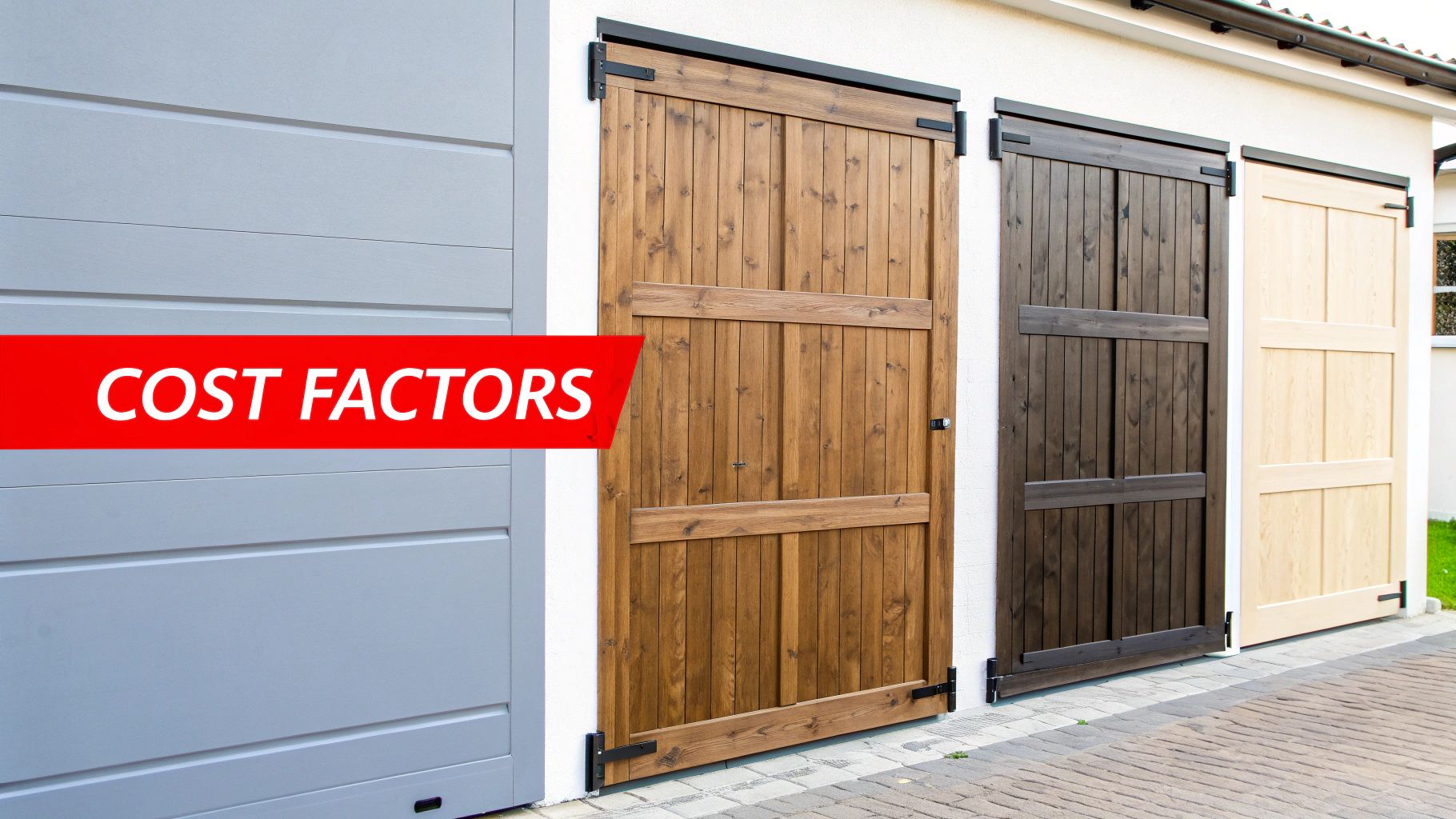
Deciphering a garage door quote can feel complex. The total price is influenced by every decision, from the door's material to its insulation rating. It’s a lot like the process of getting accurate home service quotes for any project—the details matter. Let's break down these factors so you can make an informed investment, whether you're in Sherman, TX, or Ardmore, OK.
Material: The Biggest Piece of the Price Puzzle
The material you choose is the single largest driver of cost. It dictates the door's price, aesthetic, durability, and long-term maintenance requirements.
- Steel: The most common choice for residential and commercial applications due to its balance of strength and affordability. Steel doors can be insulated and come in a vast array of styles.
- Aluminum: Lighter than steel and naturally rust-resistant, making it ideal for humid environments and modern full-view glass designs. However, it is more susceptible to denting.
- Wood: Offers unmatched curb appeal and a classic, high-end look. It carries a premium price tag and requires regular maintenance to protect it from the harsh Texas sun and Oklahoma humidity.
- Wood Composite: Delivers the aesthetic of wood without the intensive upkeep. Made from recycled wood fibers, it resists the moisture-related splitting and rotting common in natural wood.
Industry data shows that a quality garage door should have a lifespan of 15 to 30 years. The material choice is the primary factor in its longevity and overall cost.
Actionable Tip: For our region's climate, a steel or wood composite door offers the best blend of durability and low maintenance, providing a strong return on investment.
Material vs Cost vs Maintenance Comparison
This table provides a data-driven comparison to help you weigh the initial investment against long-term maintenance commitments.
| Material | Average Cost Range | Pros | Cons / Maintenance |
|---|---|---|---|
| Steel | $750 – $3,500 | Durable, affordable, low maintenance, huge style variety. | Can dent; lower-end models can rust if scratched. |
| Aluminum | $1,500 – $5,000 | Lightweight, rust-proof, great for modern/glass designs. | Dents more easily than steel. |
| Wood | $2,000 – $10,000+ | Unmatched natural beauty, high-end curb appeal. | Expensive, requires regular painting/staining to prevent rot. |
| Wood Composite | $1,200 – $4,000 | Mimics real wood, moisture and rot-resistant. | Can be more expensive than steel; limited style options. |
Size and Insulation: More Than Just Dimensions
While door size is a straightforward cost factor—a double door requires more material and heavier hardware than a single—insulation is a strategic investment with measurable returns, especially in our climate.
Insulation is measured by its R-value, which indicates its resistance to heat transfer.
A higher R-value provides a superior thermal barrier. In a Texas summer, it helps block radiant heat from entering your garage. During an Oklahoma winter, it prevents heat from escaping. This thermal regulation can lead to quantifiable energy savings and creates a more comfortable, usable space.
For optimal performance, a triple-layer door with a thick polystyrene or polyurethane insulation core is the industry standard. The upfront cost is often recuperated through lower utility bills over the door's lifespan.
Commercial Doors: Built for Business
For commercial properties, the focus shifts from aesthetics to performance, durability, and compliance. Commercial doors are engineered for high-demand environments.
- High-Cycle Springs: A standard residential spring is rated for about 10,000 cycles (one open/close cycle). A commercial door for a distribution center or auto shop may require springs rated for 25,000, 50,000, or even 100,000 cycles to minimize downtime.
- Wind Load Ratings: This is a critical specification for businesses in Texas and Oklahoma. Doors with a high wind load rating are structurally reinforced to withstand severe weather, a requirement often mandated by local building codes to protect assets and ensure operational continuity.
- Safety and Security: Commercial systems often incorporate advanced safety features compliant with OSHA standards and security measures like heavy-duty locks and integrated access controls. These are essential for protecting inventory and personnel.
Understanding these core factors empowers you to evaluate quotes with confidence, ensuring you invest in a door that delivers long-term value and performance.
Understanding Professional Installation Labor Costs

While the physical door is a major expense, the professional labor component of the cost to replace a garage door is an investment in safety, precision, and long-term reliability. This is not unskilled labor; it is a technical service requiring specialized training and tools. A garage door is a large, heavy, and complex mechanical system operating under extreme spring tension.
The Dangers of DIY and the Value of Expertise
DIY installation attempts often go wrong, particularly when handling torsion springs. These components are under immense tension and can cause severe injury or property damage if they fail or are mishandled. This is why UL 325, a key safety standard, governs the safe installation and operation of garage door systems.
A professional installer is trained to manage these high-tension components safely. Their expertise ensures the door is perfectly balanced, which is critical for smooth, long-term operation. An improperly installed door will cause premature wear on parts, leading to frequent breakdowns and service calls that negate any initial "savings" from a DIY attempt.
Actionable Tip: Investing in a professional garage door installation is the most effective way to protect your product warranty and avoid costly future repairs.
What’s Included in a Standard Labor Fee
A professional labor fee is comprehensive, covering every stage of the replacement process. Here's what's typically included:
- Complete Teardown and Removal: Safe dismantling of the old door, tracks, springs, and hardware.
- Responsible Disposal: Hauling away and disposing of all old components in accordance with local regulations.
- New Door and Track Installation: Precise assembly and mounting of the new door and track system.
- Spring System Installation and Balancing: The most critical technical step, where springs are calibrated to perfectly counteract the door's weight.
- Weather Seal and Trim: Installation of new perimeter weatherstripping to seal the opening against the elements, often finished with new exterior trim.
Variables That Can Affect Your Labor Costs
While most installations are standard, certain site-specific conditions can increase labor costs. This is why quotes can vary even for the same door model. Expect labor to add $300 to $800 to the total project cost, depending on complexity.
Key Takeaway: Insist on an itemized quote that clearly separates material and labor costs. If a price seems unusually low, scrutinize what is—and isn't—included.
Common factors that increase labor costs:
- Structural Modifications: The need to reframe or reinforce the door opening, especially in older structures.
- Complex Electrical Work: Installing a new, code-compliant outlet for an opener or rerouting existing wiring.
- Custom Sizing or Low Headroom: Non-standard openings that require special track kits and additional installation time.
The same principles apply to other automated entry systems. The factors influencing professional electronic access gate installation are similar, involving site prep, electrical work, and system calibration.
Budgeting for Hidden Costs and Smart Upgrades

To create an accurate project budget, you must account for potential ancillary costs beyond the door and labor. Planning for these items prevents budget overruns and ensures a smooth project from start to finish. This foresight is key to ensuring the final cost to replace your garage door aligns with your expectations.
Uncovering Potential Additional Expenses
Our technicians often identify pre-existing issues during site assessments that must be addressed for a safe and durable installation. These are not upsells, but necessary prerequisites.
Common additional expenses include:
- New Framing or Structural Repairs: Rotted or damaged wood around the door opening compromises structural integrity and must be replaced.
- Permit Fees: Some municipalities in Texas and Oklahoma require building permits for garage door replacement, particularly if structural alterations are involved.
- Electrical Work: Upgrading from a manual door or bringing outdated opener wiring up to current electrical codes may require a licensed electrician.
- Disposal of an Old Wood Door: Heavy, non-standard doors may incur additional disposal fees due to their weight and bulk.
Investing in Smart Upgrades During Installation
Replacing your garage door is the optimal time to upgrade the entire system. Bundling upgrades with the initial installation is more cost-effective than adding them later, as it consolidates labor costs.
Upgrading your system during replacement is about future-proofing your property. A smart opener or battery backup provides tangible daily value and enhances security, especially during a Texas thunderstorm or an Oklahoma power outage.
Consider these high-impact additions:
- A New Garage Door Opener: If your opener is over 10 years old, replacing it with the door is a smart move. Modern openers are quieter, safer, and more reliable.
- Smart Home Integration: Wi-Fi-enabled openers allow you to monitor and control your garage door from a smartphone, enhancing security and convenience for package deliveries.
- Battery Backup: An essential feature that ensures your door remains operational during a power failure, preventing you from being trapped inside or locked out.
- Ultra-Quiet Belt Drive Opener: Ideal for homes with living space above the garage, belt-drive systems eliminate the noise and vibration of older chain-drive models.
Exploring these modern garage door accessories transforms a simple replacement into a significant property enhancement.
DIY vs. Professional Replacement: A Cost and Safety Analysis
The prospect of saving on labor costs by attempting a DIY garage door replacement is appealing. However, the potential savings do not outweigh the significant safety risks and hidden costs involved. This is one home project where professional expertise is non-negotiable.
A garage door is a complex system where components like torsion springs are under extreme tension. Mishandling these can lead to catastrophic failure. The danger is significant enough that the Occupational Safety and Health Administration (OSHA) has stringent standards for professional technicians. For a homeowner without specialized tools and training, the risk of severe injury is substantial.
The Hidden Costs of a DIY Installation
Beyond the safety risks, a DIY project can quickly become more expensive than a professional installation. Unexpected issues can lead to a cascade of additional costs.
Specialized tools required for a safe installation include:
- Winding Bars: The correct tool for adjusting spring tension. Using substitutes like screwdrivers is a primary cause of spring-related injuries.
- Tension Gauges: Professionals use these to perfectly balance the door, which is essential for the longevity of the opener motor and smooth operation. This cannot be done by "feel."
- Levels and Clamps: Precise track alignment is critical. Misalignment causes jerky operation that prematurely wears out rollers and stresses the entire system.
Furthermore, any damage to new components during a DIY installation is your financial responsibility. A dented panel or bent track could cost more to replace than the initial labor savings. Crucially, most manufacturers will void the product warranty if the door is not installed by a certified technician.
An improperly balanced door forces the automatic opener to lift more weight than it was designed for, leading to premature motor burnout. This common DIY error can double the project's ultimate cost when an expert garage door repair becomes necessary.
Why Professional Installation Is the Smarter Investment
Hiring a professional team is an investment in safety, expertise, and peace of mind. A certified technician completes the job correctly and safely the first time, ensuring every component is calibrated for quiet, reliable performance. You also gain a warranty and a professional point of contact for future service needs. For property owners in Texas and Oklahoma, the combination of safety risks, potential for costly errors, and a voided warranty makes professional installation the only logical choice.
Actionable Tips to Save on Your Garage Door Replacement
A new garage door is a significant investment, but strategic planning can help you manage the cost to replace a garage door without sacrificing quality. The goal is to maximize value, not just find the lowest price.
Time Your Installation Strategically
The garage door industry has peak seasons, typically spring and early summer. Scheduling your installation during the slower off-season (late fall and winter) may provide access to better pricing or promotions, as companies aim to keep their skilled crews busy year-round.
Ask About Stock and Overstock Models
Custom-ordered doors come at a premium. Inquire about standard, in-stock models. Companies purchase these popular styles in bulk, and the cost savings are often passed to the customer. Also, ask about "overstock" inventory from canceled or mis-measured orders; these are new doors that can sometimes be purchased at a significant discount.
Get Multiple Itemized Quotes
This is a critical step. Obtain at least three detailed, itemized quotes from reputable local installers. An itemized quote breaks down the costs for the door, labor, hardware, and disposal, allowing for a true apples-to-apples comparison.
An itemized quote is your primary tool for negotiation and budget validation. It exposes hidden fees and ensures you understand exactly what you are paying for.
Invest in Insulation for Long-Term Savings
In the Texas and Oklahoma climate, an insulated garage door is a sound financial decision. While the upfront cost is higher, the long-term energy savings are substantial. The thermal barrier reduces the load on your HVAC system, lowering monthly utility bills. Over the 15- to 30-year lifespan of the door, these savings can exceed the initial investment in insulation.
Explore Flexible Financing Options
If the upfront cost presents a challenge, ask about financing. Many installation companies offer payment plans through lending partners. You can find information on garage door replacement financing options that can make the project more manageable.
Finally, protect your investment. Regular professional garage door maintenance is the most effective way to prevent small issues from becoming expensive, emergency repairs, ensuring your new door operates flawlessly for years.
Your Top Questions About Garage Door Replacement Costs
Here are answers to common questions we receive from home and business owners across Texas and Oklahoma.
Is It Cheaper to Replace Just the Garage Door Panels?
For minor, isolated damage, replacing a single panel can be cost-effective. However, if multiple panels are damaged or if the door is old, a full replacement is often the more financially sound and safer option. Patching an aging system can lead to a cycle of repairs that ultimately costs more than a new door.
Will a New Garage Door Actually Increase My Home's Value?
Absolutely. Garage door replacement consistently ranks as one of the home improvement projects with the highest return on investment (ROI). According to industry reports, homeowners in the Southwest can recoup over 90% of the project's cost in added home value. A modern, well-functioning garage door significantly boosts curb appeal and signals to potential buyers that a home is secure and well-maintained.
What if I Live in a High-Wind Area?
This is a critical consideration for our region. A wind-rated or storm-ready garage door is a wise investment. These doors are engineered with reinforced struts and heavy-duty hardware to withstand the high wind pressures common in Texas and Oklahoma storms. While they have a higher initial cost, they are often required by local building codes and can prevent catastrophic structural damage during a severe weather event. Consider it an essential part of your property's defense system. You can further enhance your setup with modern garage door accessories that improve security and convenience.
Ready to get a clear, data-driven quote for your project? The expert team at Overhead Door Co. of Tex-Oma is here to help you find the perfect garage door solution for your home or business. Contact us today for a professional consultation.