
If your garage door has ground to a halt, a broken spring is the most likely suspect. For homeowners and businesses in Texas and Oklahoma, a professional replacement typically costs between $250 and $450, a price that includes high-quality parts and expert labor. This investment ensures your door operates safely and reliably, preventing further damage and potential safety hazards.
Breaking Down Your Garage Door Spring Replacement Cost
Did you hear a sudden, loud BANG from your garage? That alarming sound is the tell-tale sign of a garage door spring failing under extreme tension. These springs are the unsung heroes of your garage, counterbalancing hundreds of pounds of door weight so the opener can do its job without strain.
When a spring breaks, your door is effectively disabled. More critically, it creates a significant safety risk that demands professional attention. According to the International Door Association (IDA), garage door systems cause thousands of injuries each year, many related to improper spring handling. The final bill for a professional, safe repair is based on a few key variables, and understanding them is crucial for homeowners and businesses in Texas and Oklahoma to secure a fair price.
What's In a Quote? The Three Main Components
When a certified technician provides an estimate, the total cost is a transparent calculation of three elements:
- The Springs: The type of spring—torsion or extension—is the primary cost driver. Their size, cycle rating (e.g., 10,000 vs. 25,000 cycles), and wire gauge determine the material cost.
- The Labor: You are investing in a technician's expertise, safety training, and specialized tools. This is not a DIY task; their skill, compliant with industry safety standards, is what ensures a correct and safe installation.
- The Service Call: This fee covers the operational cost of dispatching a fully equipped service vehicle and a qualified technician to your property for a thorough diagnosis.
So, how do these components translate into real-world numbers? Let's examine the specifics.
Torsion vs. Extension Springs: A Tale of Two Costs
Most modern garage doors utilize torsion springs, which are robust springs mounted on a bar directly above the door. They are engineered for durability and are the industry standard for safety. Replacing a pair of torsion springs typically costs between $300 and $450.
Older or lighter doors might use extension springs, which run parallel to the horizontal tracks. They are less common today due to safety concerns and a shorter lifespan. A replacement for a pair of these generally falls between $250 and $350. For a more detailed financial breakdown, you can review various garage door replacement cost analyses.
Knowing this distinction helps you understand the value you receive. A professional repair isn't just about restoring function; it's about ensuring your residential or commercial garage doors are balanced, safe, and reliable for thousands of cycles to come.
Breaking Down The Key Cost Factors
Ever wonder why a friend paid $250 for a spring replacement while your quote came in closer to $450? The final price tag for a garage door spring replacement isn't a simple, flat fee. It’s actually a blend of several crucial variables that can swing your final bill one way or the other. Getting a handle on these factors is the first step to feeling confident you're getting a fair, transparent price.
The biggest driver behind the cost is the type of spring system your garage door relies on. Think of it like buying tires for a car—a compact sedan needs something very different from a heavy-duty truck. In the same way, a lightweight, single-car door might use simple extension springs, while a heavier, insulated, or custom wood door needs a much more robust torsion spring system.
This infographic gives a great visual breakdown of how the spring type, your door's size, and labor all come together to determine the total cost.
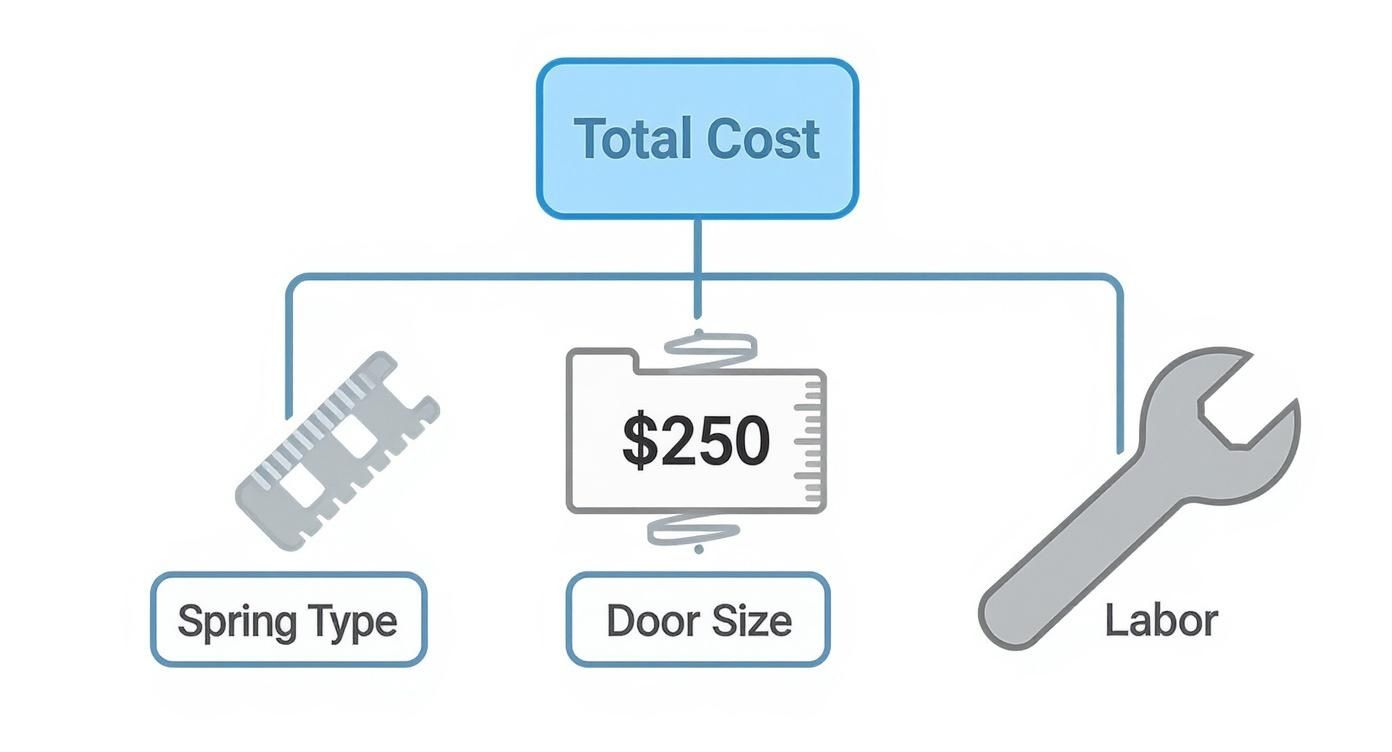
As you can see, those three core components—the spring itself, the door's specs, and the technician's time—form the foundation of your total expense.
The Spring System Torsion vs Extension
The design of your garage door dictates which spring system it uses, and this is easily the most significant factor influencing the repair cost.
-
Torsion Springs: These are the modern standard for good reason. You'll find them mounted on a metal bar just above the garage door opening. They work by twisting (or "torquing") to store energy, which gives them the power to lift the door in a smooth, controlled motion. Because they're built to handle heavier doors and last much longer—often rated for 10,000 to 20,000 cycles—their upfront replacement cost is higher.
-
Extension Springs: Typically found on older or more basic garage doors, these springs run along the sides of the door, parallel to the horizontal tracks. They operate more like a giant rubber band, stretching out to lift the door and contracting as it closes. While the parts themselves are cheaper, they have a shorter lifespan and can be less safe if one breaks without a safety cable in place.
So, how do these two systems stack up when it comes to cost and performance? The differences are pretty clear. Torsion springs represent a bigger initial investment but pay off in durability and safety over the long haul. Extension springs are the more budget-friendly option for the immediate fix, but they come with trade-offs.
Cost Influencer Comparison Torsion vs Extension Springs
| Feature | Torsion Springs | Extension Springs |
|---|---|---|
| Material Cost | Higher | Lower |
| Durability | Excellent (10,000-20,000+ cycles) | Good (5,000-10,000 cycles) |
| Safety | Safer; contained on a bar if they break | Less safe; can fly off if not secured |
| Performance | Provides a smoother, more balanced lift | Can cause a jerky or uneven lift |
| Ideal For | Heavier, wider, or insulated doors | Lighter, single-car, or older doors |
This table really highlights that while you might save a few dollars upfront with extension springs, torsion springs are generally the superior system for modern, heavier garage doors due to their safety and longevity.
Door Size And Weight Considerations
The size and material of your garage door play a direct role in the kind of springs it needs, which in turn affects the price. A standard single-car aluminum door is a featherweight compared to a double-wide, insulated steel or wood-overlay door. The heavier the door, the stronger the spring required to lift it.
Heavier doors require springs made from thicker gauge wire and more coils to generate the necessary lifting force. This naturally increases the material cost. A massive commercial roll-up door at a warehouse, for example, will need significantly more powerful—and expensive—springs than a standard residential door.
This isn't just a local trend; it's a key principle in the entire industry. As residential and commercial construction continues, the demand for varied garage door sizes and materials grows. According to market analysis, factors like door size and material are major cost drivers in North America because heavier doors demand more substantial hardware to operate safely. You can dive deeper into these garage and overhead door market trends if you're curious.
Labor Rates And Regional Differences
Finally, your zip code matters. The cost of skilled labor often varies based on location. Rates for an expert technician in a major metro area are typically higher than in more rural parts of Texoma. This difference simply reflects the local cost of doing business, from insurance and fuel to wages.
A quality garage door repair service will always provide an itemized quote. This ensures you can see a clear breakdown of the costs for both parts and labor, so you know exactly what you’re paying for before any work begins.
Why It’s Smart to Replace Both Springs at Once
When a garage door spring breaks, you’ll almost always hear a pro recommend replacing both. It’s easy to dismiss this as an upsell, but it's standard practice for a reason—it’s about safety, performance, and saving you money in the long run. Trying to cut the initial cost to replace a garage door spring by only swapping one often just sets you up for another service call a few months later.
Think of it like the headlights on your car. When one burns out, you replace the pair, right? They've endured the same number of hours and the same road conditions. The one that’s still working is likely on its last legs, and you don’t want one bright new light and one dim old one.
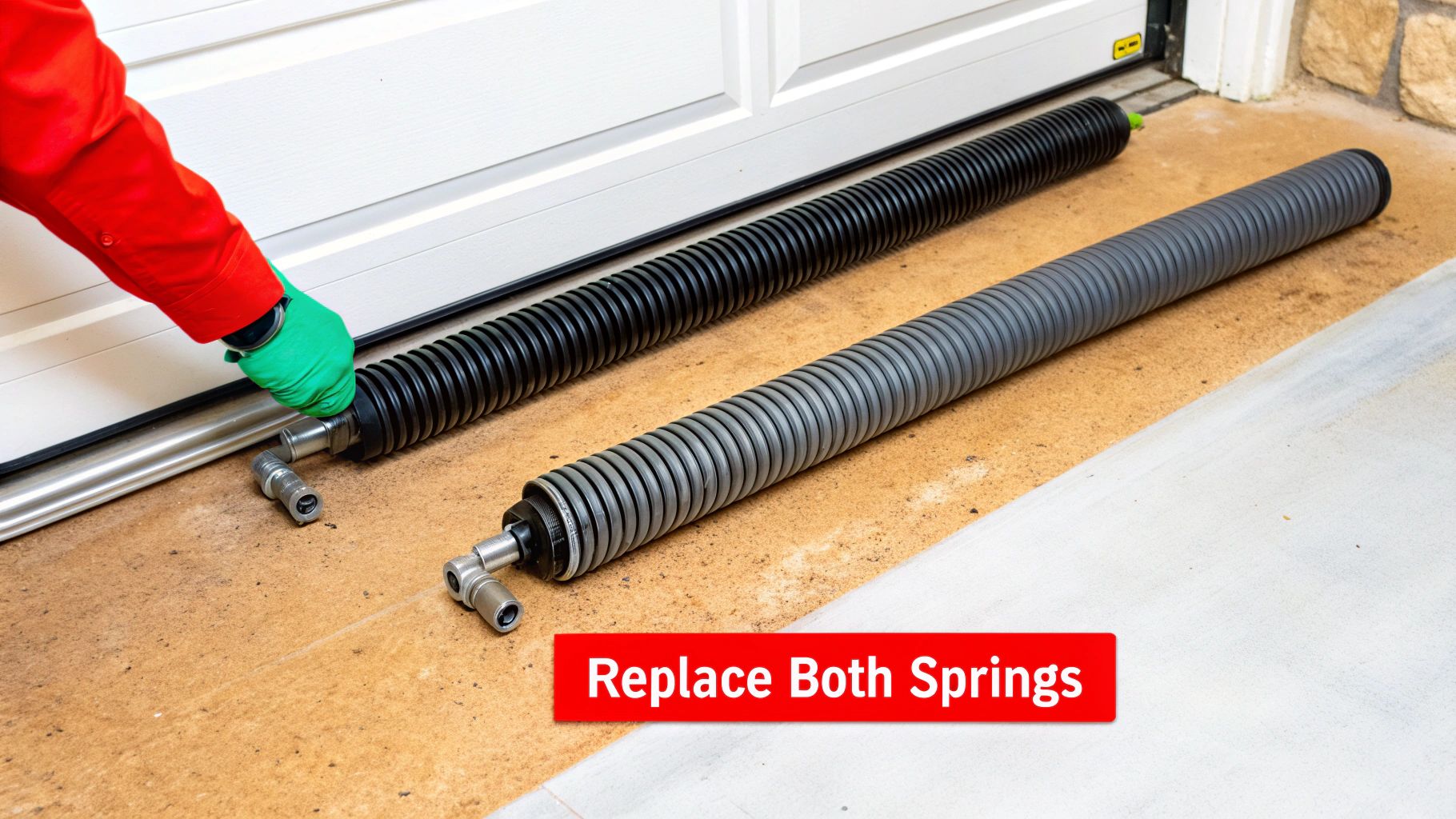
It’s the exact same principle with your garage door springs. They work together as a team, sharing the incredible stress of lifting a door that can easily weigh hundreds of pounds. When one fails, the other isn't far behind.
The Downside of Mismatched Springs
Putting a brand-new, high-tension spring next to a worn-out, fatigued one creates a serious imbalance. The new spring ends up shouldering most of the load, while the old one just can't pull its weight anymore. This uneven force is a recipe for trouble.
- Accelerated Wear: The new spring is immediately overworked, which can drastically shorten its lifespan from day one.
- Opener Strain: Your garage door opener has to work much harder to make up for the imbalance, putting extra stress on its motor and gears.
- Jerky Door Movement: You’ll likely notice the door lifting unevenly. It might shudder, creak, or even get stuck, which can damage the door panels and rollers.
This imbalance pretty much guarantees one thing: that old spring is going to break. And when it does, it'll probably be sooner than you think. In fact, a survey from the International Door Association revealed that replacing both springs can extend the life of your entire garage door system by up to 40%.
The Financial Argument for Replacing Both
Looking at it from a budget perspective, doing both at once just makes sense. A good chunk of any repair bill comes from the service fee and the technician's labor to get to your home and do the work.
By choosing to replace both springs, you're only paying for that labor and service call one time. If you replace one now and the other fails six months down the road, you’re paying for a whole new emergency visit—essentially doubling your labor costs for what could have been a single job.
This isn’t just an opinion; it’s a proven way to save money over time. Bundling the repair into one visit is always more economical than waiting for the second failure. Experts agree that while the initial cost is slightly higher, replacing both springs is the best way to maintain the door’s balance and prevent future problems. You can dig deeper into how these factors affect overall garage door costs.
Whether you're looking at a full garage door installation or a simple repair, investing in a complete, balanced system is always the smartest move.
The Hidden Costs and Dangers of DIY Replacement
Thinking you can save a few hundred dollars on the cost to replace a garage door spring by doing it yourself? While that can-do attitude is great for many home projects, this isn't one of them. Garage door springs are in a class of their own; they're under an incredible amount of tension, and one small misstep can lead to disastrous consequences for your property and, more importantly, for you.
The physics at play here are straightforward but dangerously powerful. A torsion spring holds a massive amount of coiled energy—enough to hoist a 400-pound door off the ground. Picture a tightly wound catapult ready to launch. If that force is released unexpectedly, it can whip the spring, tools, or other parts across your garage at high speed. It's precisely for this reason that professional technicians use specialized winding bars and follow rigorous safety procedures to manage that force.
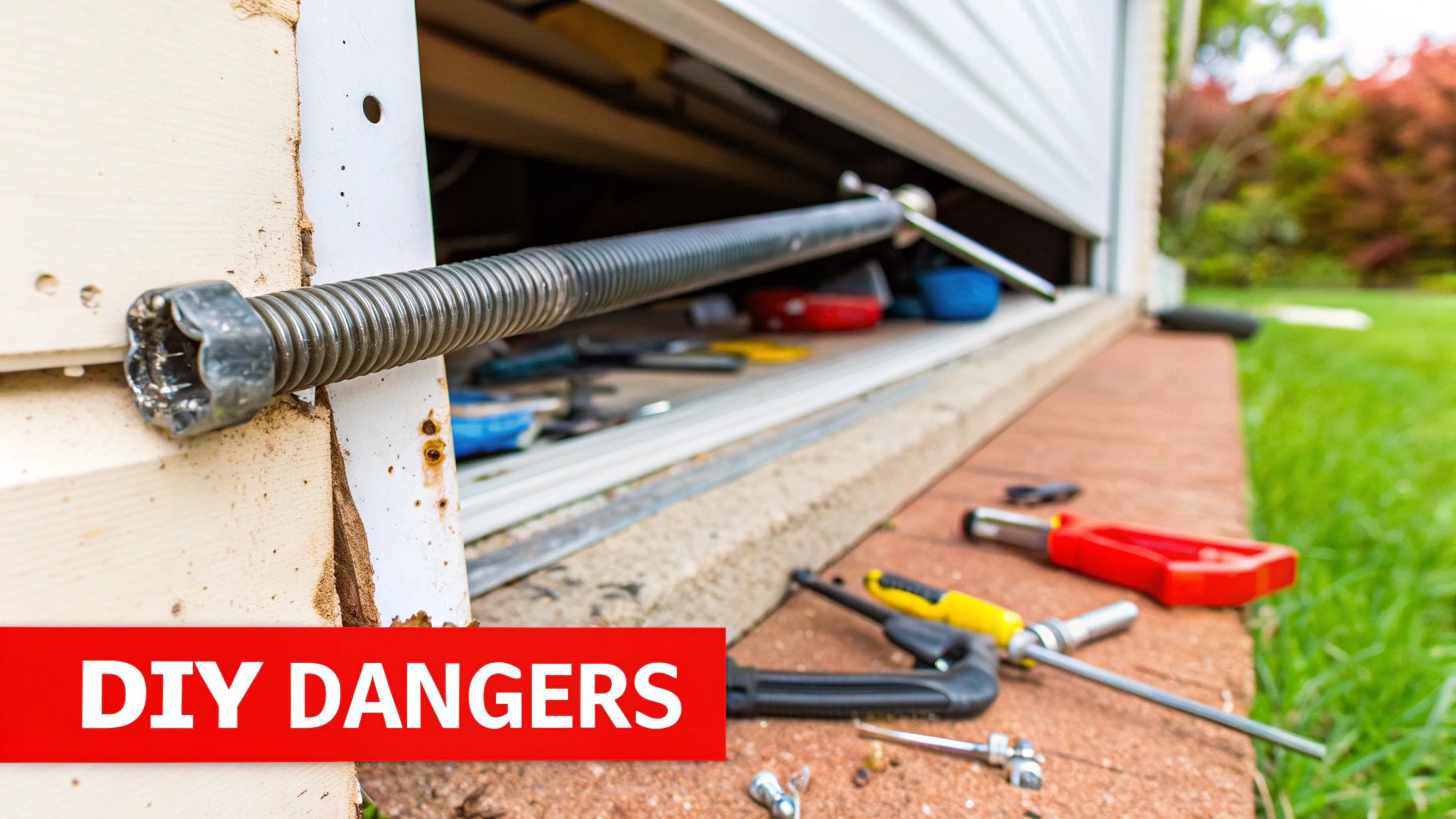
The True Cost of a Failed DIY Job
Aside from the glaring safety risks, a DIY attempt can end up costing you far more than you were trying to save. That initial quote from a pro starts to look pretty good once you factor in the hidden expenses of a project gone wrong.
- Specialized Tools: You won't find proper winding bars, cable tensioners, or locking pliers in a standard home toolkit. Buying these for a single job can be a hefty, and often unforeseen, expense.
- Incorrect Parts: Ordering the wrong spring is an easy and common mistake. A spring that isn't perfectly matched to your door's weight and size won't balance it correctly, causing strain and leading to another failure much sooner.
- Collateral Damage: One slip can do a lot more than break the spring. Many DIY attempts result in dented door panels, bent tracks, or even a burned-out garage door opener motor trying to lift an unbalanced load.
When a "Savings" Becomes an Emergency Call
In the end, many DIY spring replacements conclude with a phone call to a professional anyway. The only difference is that now it's an emergency. A door that's half-open, hanging crooked, or completely stuck is a major problem that needs an immediate fix.
An emergency service call to fix a botched DIY job often costs more than the original standard replacement quote. The technician has to spend extra time and labor undoing the incorrect work before they can even start the real repair.
Instead of rolling the dice on your safety and wallet, a scheduled appointment gets the job done correctly from the start. A professional brings the right tools, the correct parts, and the trained eye to spot other potential issues with your system's cables, drums, or rollers. Investing in a professional garage door repair service isn't just about paying for a fix—it's about ensuring the safety, reliability, and long-term health of your entire garage door system.
How to Get a Transparent and Fair Quote
Trying to figure out the cost of replacing a garage door spring can feel like a shot in the dark, but it doesn't have to be. Getting a clear, honest quote is much simpler when you know what to look for and what to ask. A truly professional company will be upfront about their pricing, but your best defense against a surprise bill is being an informed homeowner.
Before you even start dialing, take a minute to gather a few key details about your garage door. Having this info ready not only helps a technician give you a more accurate estimate right away, but it also signals that you've done your research.
What to Know Before You Call
A little prep work on your end makes a huge difference. To get the most accurate quote possible, try to have this information handy:
- Door Size: Just a rough measurement is fine. Is it a standard single-car door (maybe 7 feet high by 9 feet wide) or a double (7 feet high by 16 feet wide)?
- Door Material: What's the door made of? Is it a lightweight aluminum door, a standard steel one, or a much heavier custom wood or composite door? The weight directly impacts which springs you'll need.
- Spring System: Take a quick, safe look. Do you see one or two large springs wrapped around a bar directly above the door? Those are torsion springs. Or do you have springs that run along the sides of the door tracks? Those are extension springs.
With these three pieces of information, you're in a great position to call for estimates and get a realistic price range from the get-go.
The Must-Ask Questions for Any Technician
Once you have a technician on the phone, your job is to pin down exactly what's included in their price. A vague, one-size-fits-all number should be a red flag.
A professional quote isn't just a single number pulled out of thin air. It should be an itemized breakdown that clearly shows what you’re paying for. If a company gets cagey about explaining their charges or uses high-pressure tactics, it's time to hang up and call someone else.
Here are the four essential questions to ask every single company you talk to:
- Is this the total, out-the-door price? Be direct. Ask, "Does your quote include everything—the springs, all labor, and any service call fees?" This simple question helps you avoid nasty surprises on the final bill.
- Will you be replacing both springs? As we covered earlier, it's standard practice to replace springs in pairs for safety and to ensure the door stays balanced. Confirm this is part of their process and included in the price.
- What kind of warranty do you offer on the parts and the labor? A company that does quality work will have no problem backing it up. You're looking for a warranty that covers both the new springs themselves and the installation workmanship.
- Are your technicians insured and certified? This is a deal-breaker. Reputable companies carry full liability insurance to protect you, your property, and their team in case anything goes wrong.
A trustworthy technician will welcome these questions and answer them clearly and confidently. Their job is to earn your trust, not rush you into a decision. By asking the right questions, you'll be able to spot a fair price and find a reliable pro for all your garage door service and maintenance needs.
Common Questions We Hear About Spring Replacement
Even after breaking down the costs, you probably still have a few questions rolling around in your head. That's completely normal. When it comes to something as important as your garage door, getting clear, straightforward answers is key.
Here are some of the most common questions we get from homeowners and business managers right here in Texas and Oklahoma, along with our honest, no-nonsense answers.
How Long Do Garage Door Springs Actually Last?
This is a great question, and the answer isn't in years—it's in cycles. One cycle is simply your garage door opening and then closing one time.
The standard torsion springs that come with most new garage doors are rated for about 10,000 cycles. If you use your door four times a day, you're putting your system through approximately 1,460 cycles per year. At that rate, you can expect a lifespan of about 7 years.
For high-traffic households or commercial applications in Texas and Oklahoma, we recommend investing in high-cycle springs. These are engineered for 25,000 cycles or more, often tripling the lifespan and providing a much better long-term return on investment.
Can I Just Buy a "Stronger" Spring for Better Performance?
It’s a logical thought: a stronger spring must be a better spring, right? Unfortunately, it doesn't work that way. Garage door springs aren't about brute strength; they're about perfect balance. Each spring is precisely engineered for the exact weight and height of your specific door.
Installing a spring that's too powerful is just as dangerous as using one that's too weak. An overpowered spring will make the door difficult to keep closed and can cause it to fly open unexpectedly. This puts an incredible amount of strain on your garage door opener, potentially burning out the motor.
A true professional doesn't guess. They use precise calculations based on the spring's Inch Pounds Per Turn (IPPT) rating to ensure the system is perfectly counterbalanced, safe, and efficient.
What Are the Signs a Spring Is About to Break?
More often than not, a spring breaks suddenly with a loud bang that startles everyone in the house. But sometimes, it gives you a few subtle hints that trouble is brewing. Learning to spot these can help you plan for a repair instead of being forced into an emergency call.
- A Visible Gap in the Coil: Take a look at the spring above your door. If you see a 2-3 inch gap where there wasn't one before, the spring has snapped.
- The Door Feels Incredibly Heavy: If you disengage the opener and try to lift the door by hand, it should feel manageable—maybe 10-15 pounds. If it feels like you're trying to lift a car, the springs are no longer doing their job.
- It Operates Crooked or Jerky: A door that shudders, shakes, or lifts unevenly is a classic symptom of one spring being broken while the other tries (and fails) to do all the work.
- The Cables Look Loose: The lifting cables on either side of the door should always be taut. If they look slack or have come off their spools, it’s a red flag for a spring-related problem.
Is It Cheaper to Buy My Own Springs Online?
You can absolutely find garage door springs for sale online, and sometimes the price tag looks tempting. But this is one of those DIY projects that is almost always a bad idea. First, you have to be 100% certain you’re ordering the exact right part for your door's weight, height, and track style. One wrong measurement and the spring is completely useless.
Second, and more importantly, most reputable garage door companies will not install parts that a customer provides. This isn't to be difficult; it's a matter of liability and warranty. We can't guarantee the safety or longevity of a part we didn't source from our trusted suppliers. Any money you might save on the part is quickly lost when you can't find a qualified pro willing to install it safely.
If you'd like to dig deeper into how these systems work, feel free to explore our collection of garage door resources and articles.
When it comes to the powerful system that lifts and lowers a multi-hundred-pound door, professional expertise isn't just a luxury—it's a necessity. For a safe, reliable, and perfectly balanced repair, trust the certified technicians at Overhead Door Co. of Tex-Oma. Contact us today for a transparent quote on your garage door spring replacement needs. https://ohdctexoma.com