
When homeowners and business owners in Texas and Oklahoma look for ways to lower energy costs, the garage door is often overlooked. But this large opening is a major source of energy loss. An energy-efficient garage door is more than a standard door; it's a specifically engineered barrier with high-density polyurethane or polystyrene insulation. Its purpose is to create a thermal break, significantly reducing heat transfer and directly lowering your heating and cooling bills.
How Your Garage Is Driving Up Energy Bills
Your garage door is likely the largest moving part of your building's exterior. If it's not insulated, it's a massive thermal weak point. For those of us in Texas and Oklahoma, this means the intense summer heat and sudden winter cold have an easy entry point. Your HVAC system is then forced to work overtime to compensate, a struggle that is reflected in your monthly utility bill.
An uninsulated door allows exterior temperatures to dominate your garage. From there, that hot or cold air infiltrates the rest of your home or commercial space, making you pay to heat or cool the outdoors.
The Hidden Cost of an Uninsulated Door
The problem extends beyond the garage. Any room sharing a wall with the garage—be it a bedroom, kitchen, or office—is directly affected. According to the U.S. Department of Energy, heat transfer through uninsulated surfaces like walls and doors is a primary cause of high energy bills. This thermal "bleeding" forces your HVAC system into a constant battle to maintain a comfortable temperature in adjacent rooms.
This infographic clearly illustrates how an uninsulated door compromises your home's entire energy envelope.
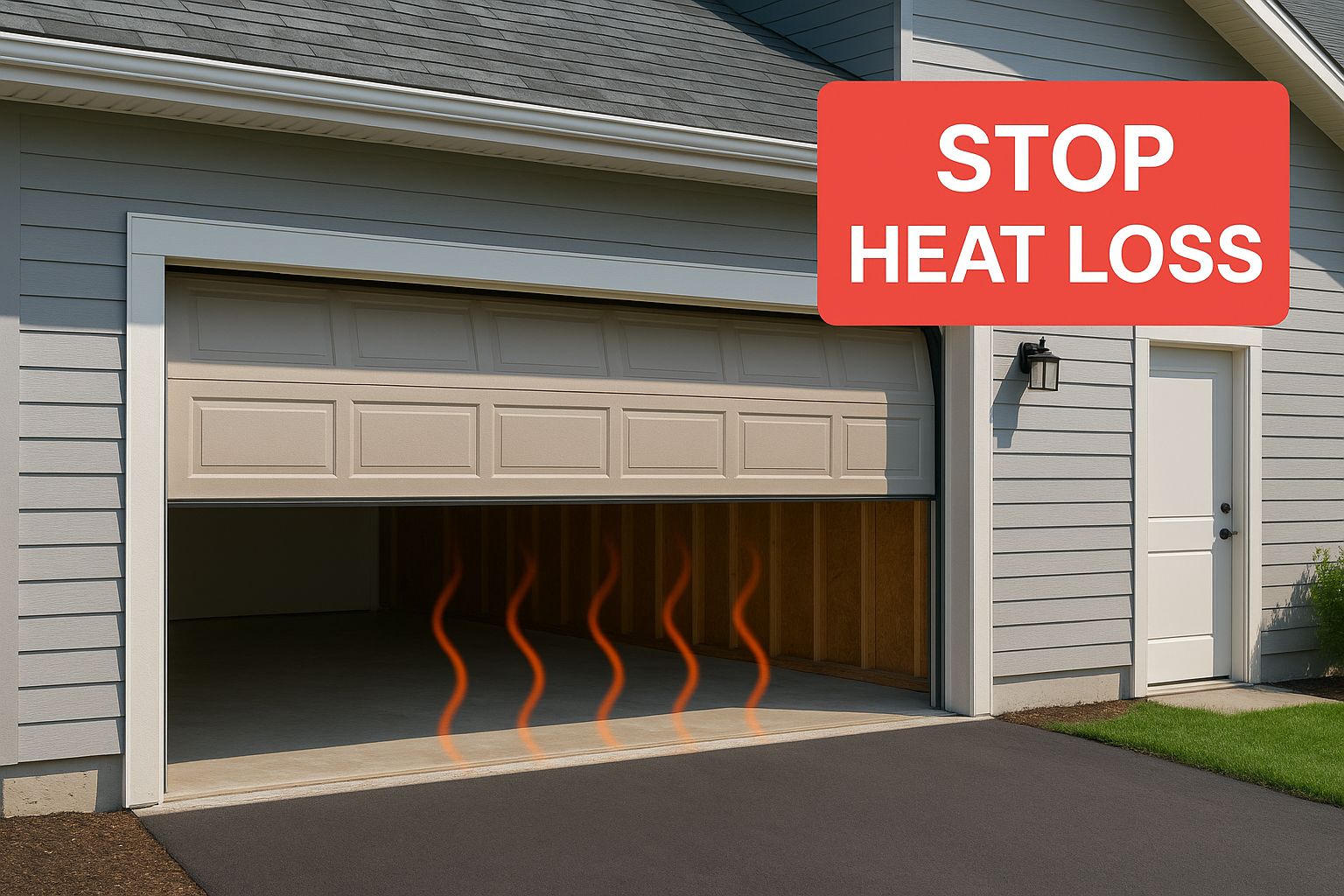
As you can see, stopping this energy transfer at the source is a critical, actionable step toward a more efficient, comfortable, and cost-effective property.
The Solution: A Powerful Thermal Barrier
The most effective fix is a professional garage door installation of an energy-efficient model. This isn't just a door; it's an engineered barrier against the elements, defined by its thermal resistance, or R-value. Think of the R-value like the UL rating on electrical equipment—it's a standardized measure of performance. A higher R-value means better insulation and more effective thermal protection.
By stabilizing the temperature in your garage, an insulated door can reduce the energy needed to heat and cool adjacent living spaces by up to 20%. This adds up to substantial, quantifiable savings year after year.
It's no surprise that homeowners and businesses are catching on. The North American garage door market was valued at $3.93 billion in 2024 and is projected to reach $5.52 billion by 2033, with a significant portion of this growth driven by the demand for energy-efficient models. For a comprehensive strategy, it's worth exploring how to improve energy efficiency in your home to see how all systems can work together.
Unpacking Garage Door R-Value and Insulation
When you're comparing options for an energy efficient garage door, the term R-value is the most critical metric. It's a straightforward, industry-standard measurement of a material's ability to resist heat flow.
Simply put, the higher the R-value, the better the door is at insulating your garage from the blistering Texas heat or a sudden Oklahoma cold snap. This single number is the key to managing your property's energy consumption and comfort.
The Heart of Efficiency: Insulation Materials
A garage door’s R-value is determined by two factors: the type of insulation used and its thickness. In the garage door industry, two materials are the standard: polystyrene and polyurethane.
- Polystyrene Insulation: A rigid foam board, this is a cost-effective choice that offers good thermal performance. It is typically cut and fitted between the door's steel panels.
- Polyurethane Insulation: This is a high-density, thermally injected foam that expands to fill every crevice within the door panels, bonding directly to the steel. This process creates a door with superior insulating properties—often providing nearly double the R-value of polystyrene for the same thickness—and adds significant structural rigidity and sound dampening.
To help you decide which is right for your home or business, here’s a practical comparison.
Garage Door Insulation Type Comparison
| Feature | Polystyrene Insulation | Polyurethane Insulation |
|---|---|---|
| Typical R-Value | R-2 to R-9 | R-10 to R-18+ |
| Cost | More budget-friendly | Higher initial investment |
| Durability | Good | Excellent (adds structural integrity) |
| Best For | Detached garages, milder climates, budget-conscious projects | Attached garages, extreme climates, long-term energy savings |
Ultimately, your choice in insulation transforms a simple door into a high-performance barrier. A well-insulated door can reduce heat loss through the opening by up to 50% compared to an uninsulated one, a game-changing statistic for any property owner.
How Construction Builds a Better Barrier
Insulation alone doesn't complete the picture. The door's construction method works in tandem with the insulation to create a truly effective thermal barrier.
A well-constructed, insulated garage door is an integral part of your property's thermal envelope. It’s the difference between a drafty, temperature-swinging space and a stable, comfortable garage that protects the rest of your home or business.
Here’s how different construction types perform:
- Single-Layer Doors: Basic, uninsulated steel panels. They offer no thermal protection and are not considered energy efficient.
- Two-Layer Doors: These doors feature a steel exterior with a layer of polystyrene insulation bonded to the back. They provide a respectable R-value suitable for many detached garages or commercial storage buildings.
- Three-Layer (Sandwich) Doors: This is the gold standard for an energy efficient garage door. A core of either polystyrene or polyurethane insulation is sandwiched between two layers of steel. This design delivers the highest R-values, superior durability, and much quieter operation.
Understanding these technical details empowers you to make an informed decision. When you're ready, a professional team can guide you through the specifics of a new garage door installation to ensure you get the perfect door for your needs.
Does an Energy-Efficient Door Really Pay for Itself?
It’s easy to view a new garage door as a simple expense. However, choosing an energy-efficient model is a strategic investment with a measurable return. While the initial cost may be higher than a basic door, the long-term financial benefits quickly justify the investment.
The payback begins with your monthly utility bills. A well-insulated door acts as a thermal barrier for what is often the largest uninsulated space in a home or commercial building.

This stabilizes the garage's temperature, reducing the thermal load on adjacent rooms. Your HVAC system runs less frequently, directly cutting your energy costs. For anyone in Texas or Oklahoma, these savings are significant and immediate.
Giving Your Property Value a Serious Boost
The financial benefits extend beyond energy savings. A new garage door offers one of the highest returns on investment (ROI) of any home improvement project. It dramatically enhances curb appeal, making a powerful first impression that translates to real value.
The proof is in the data. Remodeling Magazine's respected annual Cost vs. Value Report consistently shows that homeowners can recoup over 100% of the cost of a new garage door at resale. It is one of the few projects that can fully pay for itself.
This incredible ROI makes it a financially sound decision. When you combine the ongoing energy savings with the substantial increase in property value, the investment case is undeniable. For a business, a durable, efficient commercial door means lower overhead and improved operational reliability.
Thinking About the Big Picture
This isn't just a niche upgrade; it's a reflection of a major market trend. The global garage door industry, valued at around $15 billion, is growing, with much of that expansion driven by consumer demand for smart, energy-saving features. Dig deeper into these trends in the 2025 Garage Door Industry Report.
By choosing an energy-efficient model, you align your property with what modern buyers and businesses prioritize: sustainability, technology, and long-term financial savings. Of course, professional installation is crucial to realizing these benefits. To ensure maximum performance, working with an expert for your garage door replacement in Lawton is essential.
Ultimately, it’s a forward-thinking choice—good for your finances, your property's value, and the environment.
Choosing the Right Door for Texas and Oklahoma
The climate across Texas and Oklahoma is defined by extremes: triple-digit summer heat and sudden, hard freezes. Your garage door is on the front line of this battle. Selecting an energy efficient garage door is not just an aesthetic choice—it's a critical decision for your comfort and operational costs.
An uninsulated door is one of the largest thermal vulnerabilities in your building. In summer, it acts as a massive radiator, beaming heat into your garage and subsequently into your living or working space. This puts an immense strain on your HVAC system. The same process occurs in reverse during a winter cold snap.
The R-Value You Actually Need Around Here
For homeowners and business owners in this region, R-value is the key performance indicator. While any insulation is an improvement, our climate demands a higher standard for meaningful impact.
To achieve tangible performance and a noticeable reduction in energy costs, you should look for a garage door with an R-value of at least R-12. For attached garages or climate-controlled workshops, an R-16 or higher is the recommended benchmark for optimal thermal protection.
This level of insulation creates a stable temperature buffer in your garage, keeping it significantly cooler in the summer and warmer in the winter. This, in turn, takes a substantial load off your primary heating and cooling system.
Beyond Insulation: Thermal Breaks and Windows Matter Too
A high R-value is the core of an energy efficient garage door, but other features are vital for peak performance in our climate. One of the most important is a thermal break.
A standard steel garage door frame can conduct heat or cold directly from the outer panel to the inner one. A thermal break—a small gap or rubber seal integrated into the door's frame—effectively stops this thermal bridging, preventing energy transfer.
Windows also require careful consideration. Standard single-pane glass can undermine the door's insulating properties.
- Insulated, Double-Pane Windows: This is a non-negotiable feature. Two panes of glass with a sealed air gap create a powerful barrier against heat transfer.
- Weather-Resistant Seals: High-quality seals around the window frames are crucial for preventing air leaks and moisture intrusion, especially during heavy rains and high humidity.
Whether you're a homeowner protecting vehicles and tools or a business needing reliable and efficient Commercial Garage Doors, choosing a door engineered for our specific climate is the smartest investment you can make. It pays dividends daily in comfort, protection, and lower energy bills.
Maximizing Efficiency with Proper Sealing
An insulated door panel is only half the battle. To create a truly energy-efficient garage door system, you must achieve a complete thermal envelope. Even a door with the highest R-value will underperform if its perimeter is not properly sealed.
Think of it like an advanced double-pane window with a leaky frame—the technology is defeated by poor implementation. Your garage door operates on the same principle. The insulated panels are the core, but the seals are what lock out the elements and prevent costly air leaks.
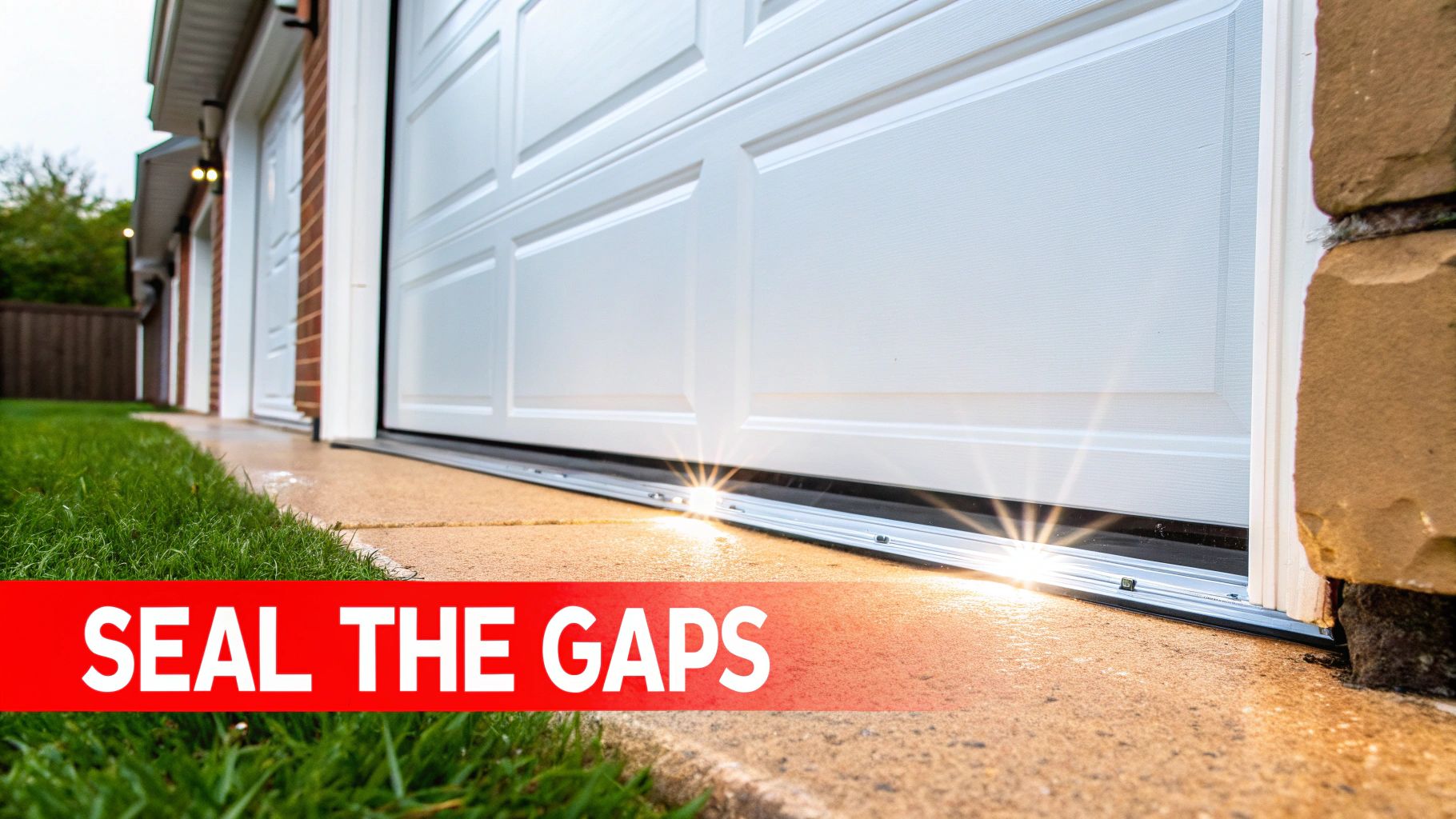
Effective seals stop drafts, moisture, pests, and dust. Without them, you're losing conditioned air and allowing the extreme Texas and Oklahoma temperatures inside, undermining your investment.
The Critical Role of Weatherstripping
Weatherstripping is the unsung hero of garage door efficiency. This flexible material closes the gaps that would otherwise compromise your insulation. Three areas are critical for a complete seal.
- Bottom Seal: This heavy-duty vinyl or rubber strip is the first line of defense. It compresses against the garage floor to block drafts, rain, and pests.
- Perimeter Seals: Also known as stop molding, these strips line the top and sides of the door jamb. The door closes against them to create an airtight barrier.
- Inter-Panel Seals: High-quality insulated doors include seals between each section. These are crucial for preventing air infiltration through the joints, a common failure point on older or lower-quality doors.
This principle of sealing leaks is fundamental to building science. For example, sealing ductwork effectively for improved efficiency follows the same logic: eliminate leaks to improve system performance and reduce energy waste.
Your Sealing Inspection Checklist
The intense sun and wild temperature swings in our region are harsh on materials like rubber and vinyl. Over time, seals can crack, become brittle, or lose their shape. A quick inspection twice a year is a practical, preventative measure.
A compromised seal, even a small one, can negate the benefits of a high-R-value door. It’s a small detail with a huge impact on your energy bills and the comfort of your garage.
Here’s a simple checklist for your inspection:
- Visual Inspection: Close the garage door during the day and turn off the lights. Look around the perimeter for any daylight. Visible light indicates an air leak.
- Feel for Brittleness: Gently press and flex the bottom and side seals. They should be pliable. If they are hard, stiff, or crack, they need to be replaced.
- Check for Compression: Examine the bottom seal. If it has flattened and no longer creates a thick cushion against the floor, its sealing ability is compromised.
Maintaining these components is smart asset management. Investing in professional-grade garage door accessories ensures you have durable, effective seals suited for our climate. Addressing any issues found during your inspection is one of the most cost-effective ways to boost your door’s performance.
Frequently Asked Questions
Choosing the right energy-efficient garage door often brings up a few questions. To help you make a confident decision for your Texas or Oklahoma property, here are clear, data-driven answers to common queries from local homeowners and businesses.
What Is a Good R-Value for a Garage Door in Texas?
For the Texas and Oklahoma climate, a minimum R-value of R-12 is the recommended baseline. This provides a substantial thermal barrier that delivers real energy savings and a noticeable improvement in comfort.
However, for attached garages or spaces used as workshops or offices, upgrading to an R-16 or higher is a strategic investment. The enhanced insulation provides maximum thermal protection, leading to a faster return on investment through greater energy savings.
Will an Insulated Garage Door Actually Lower My Electric Bill?
Yes, absolutely. An insulated garage door stabilizes the temperature in your garage, creating a buffer zone that protects the rest of your home or building. This significantly reduces the workload on your HVAC system, especially in rooms adjacent to the garage.
The impact is measurable. Industry studies demonstrate that a professionally installed insulated door can reduce energy loss through the garage opening by over 70%. This efficiency gain translates directly into quantifiable savings on your monthly heating and cooling costs.
It's one of the most tangible financial benefits of upgrading from an uninsulated door.
Can I Just Add Insulation to My Current Garage Door?
While DIY insulation kits are available, they are a temporary fix, not a permanent solution. A primary concern is that these kits add significant weight to the door, disrupting its balance and placing excessive strain on the opener and springs. According to the Door & Access Systems Manufacturers Association (DASMA), modifying a door's weight can lead to premature system failure and create serious safety hazards.
In contrast, a factory-made energy-efficient garage door is an engineered system. The insulation is integrated between steel layers during manufacturing, ensuring a superior R-value, greater structural integrity, and safe, reliable operation.
Are Energy Efficient Garage Doors a Good Investment?
Yes, they are an excellent investment. While the upfront cost is higher than a non-insulated door, the long-term ROI is compelling and comes from several key areas:
- Consistent Energy Savings: Immediate and ongoing reductions in utility bills.
- Enhanced Comfort: Eliminates drafts and temperature swings in adjacent rooms.
- Increased Property Value: A modern, insulated door boosts curb appeal and offers a high ROI at resale, often exceeding 100% according to industry reports.
- Superior Durability: The multi-layer construction provides greater resistance to dents and damage.
When all factors are considered, upgrading to an insulated garage door is one of the most practical and financially sound improvements a property owner can make.
Ready to enhance your property's comfort, value, and efficiency? The expert team at Overhead Door Co. of Tex-Oma is here to help you select and install the perfect energy efficient garage door for your home or business. Contact us today for a consultation.