
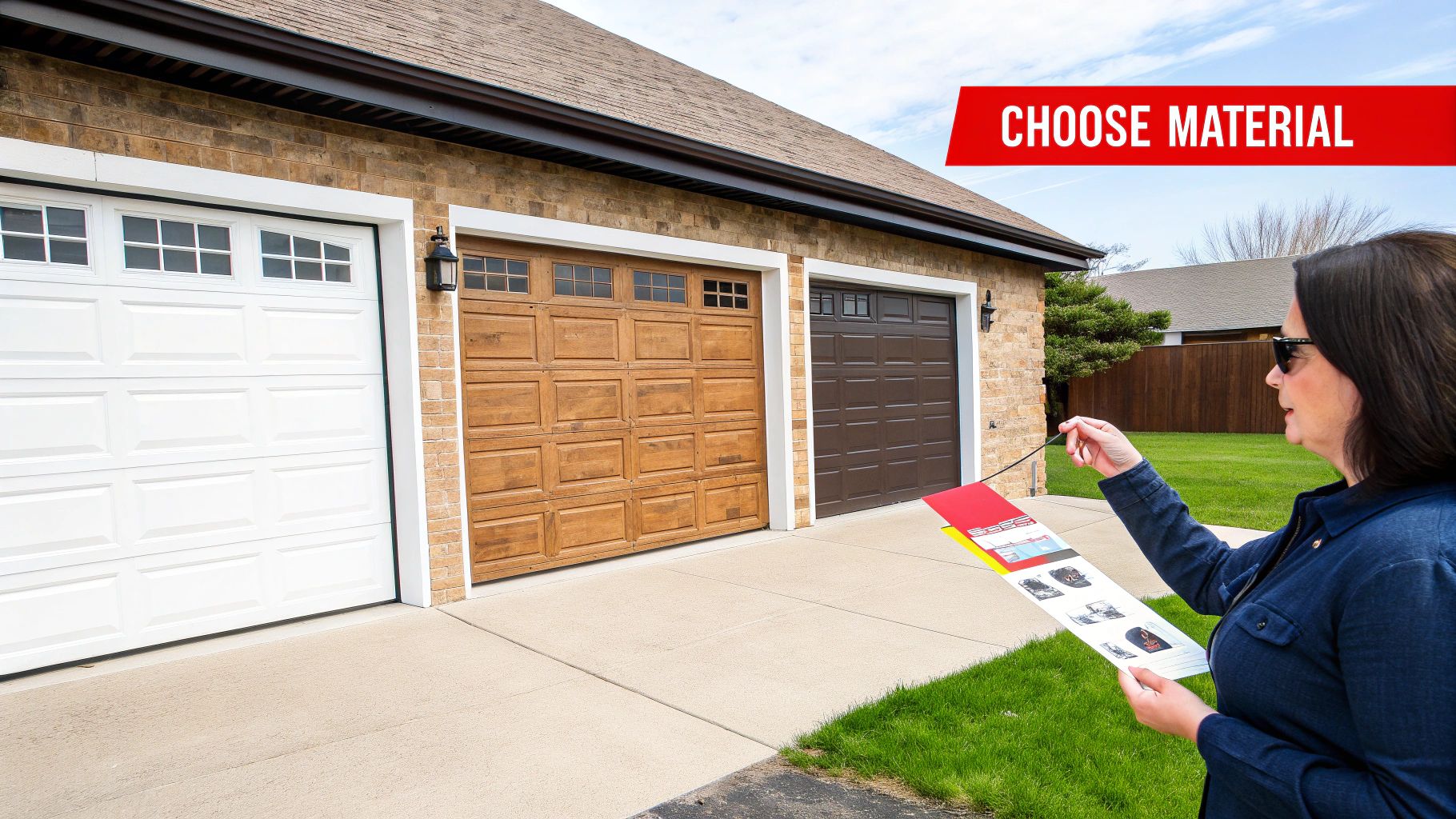
Picking the right garage door material is a significant investment that impacts your property's security, energy efficiency, and curb appeal. According to the 2023 Cost vs. Value Report by Remodeling Magazine, a garage door replacement recoups an average of 102.7% of its cost upon resale, making it one of the highest ROI home improvement projects. For homeowners and businesses in Texas and Oklahoma, where extreme weather is a constant, this decision carries even more weight.
How to Select the Right Garage Door Material
Choosing a garage door requires a data-driven approach, not just a stylistic one. In Texas and Oklahoma, properties face intense UV radiation, high humidity, and severe weather events, including hailstorms that meet the National Weather Service's "severe" criteria (1-inch diameter or larger). Your door must be a resilient barrier against these elements.
Think of this guide as your strategic plan. We'll analyze the performance benchmarks of common materials—steel, wood, aluminum, and more—to help you make an informed decision.
To get started, ask yourself these critical questions:
- Climate Resilience: How will the material perform against intense sun, humidity, and potential impact from hail or high winds as defined by local building codes?
- Maintenance Demands: What is the long-term maintenance schedule, and what are the associated costs? Do you need a "set-it-and-forget-it" solution or are you prepared for regular upkeep?
- Budgetary Constraints: What is the total cost of ownership, factoring in the initial purchase, installation, and potential long-term maintenance or repair expenses?
- Aesthetic & Functional Goals: Does the material align with your property’s architectural style and meet operational needs (e.g., high-cycle use for a commercial business)?
Making the right choice upfront ensures your garage door installation delivers long-term value and saves you from costly premature replacements.
Navigating Your Priorities
This decision tree illustrates how prioritizing budget, aesthetics, or low maintenance can guide you toward the optimal garage door material for your specific needs.

As the data shows, if low maintenance and cost-effectiveness are your primary drivers, steel is the dominant choice. However, for achieving a specific architectural aesthetic where budget is less of a concern, natural wood remains a premium option.
Steel doors command a significant market share for a reason: they provide an optimal balance of durability, cost, and design flexibility. The global garage door market, valued at over $20 billion, is heavily influenced by the demand for steel products due to their superior performance-to-cost ratio for both residential and commercial applications.
Garage Door Material Quick Comparison Guide
This table provides a side-by-side comparison of common materials, helping you weigh the pros and cons based on key performance indicators.
| Material | Average Cost | Durability | Maintenance Level | Best For |
|---|---|---|---|---|
| Steel | $$ | High | Low | Homeowners & businesses seeking the best overall ROI, durability, and design options. |
| Wood | $$$$ | Moderate | High | High-end residential properties where achieving a specific custom look is the top priority. |
| Aluminum | $$$ | Moderate | Low | Modern commercial/residential buildings and coastal areas where corrosion is a primary concern. |
| Fiberglass | $$$ | Moderate | Low | Mimicking a wood aesthetic in harsh, humid climates without the associated high maintenance. |
| Vinyl | $$ | High | Very Low | High-traffic environments (e.g., family homes, commercial warehouses) needing extreme dent resistance. |
Ultimately, the best choice is the one that aligns with your property's specific environmental and operational demands. Use this table to narrow your options before exploring specific styles and insulation ratings.
A Deep Dive Into Steel Garage Doors
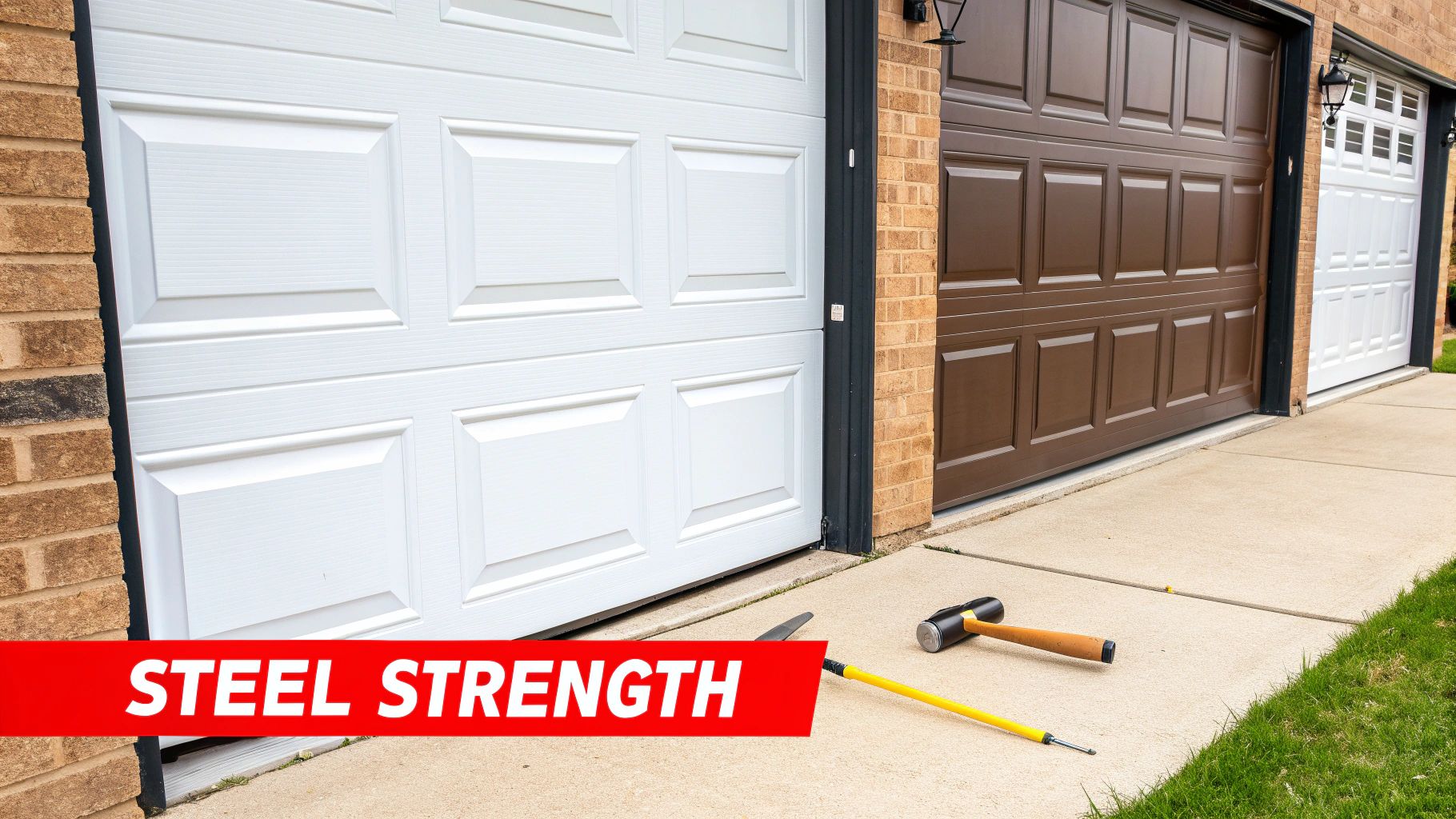
In the garage door industry, steel is the benchmark material, offering an unmatched combination of strength, cost-effectiveness, and design versatility. For homes and commercial properties across Texas and Oklahoma, its inherent durability provides a robust security barrier that withstands daily operational wear and tear.
This resilience makes steel a sound investment. Unlike materials that can warp or rot in our humid climate, steel maintains its structural integrity with minimal maintenance. This is a critical advantage during storm season, providing reliable protection when high winds and debris are a threat.
Understanding Steel Gauge And Durability
Not all steel is created equal. The key differentiator is its gauge, a measurement of thickness. The system works inversely: the lower the gauge number, the thicker and more durable the steel.
- 24-Gauge Steel: This is a premium, heavy-duty thickness. It offers superior resistance to dents and impacts, ensuring a longer service life. It is the recommended standard for commercial applications and for homeowners seeking maximum durability.
- 27- or 28-Gauge Steel: This is a more common, budget-friendly option. While still durable for residential use, this thinner steel is more susceptible to dents from impacts like stray basketballs or minor vehicle bumps.
For most properties in the Texoma region, a 24- or 25-gauge door provides the optimal balance of strength and value. Investing in a thicker gauge ensures your door can withstand minor accidents, making it a prudent long-term decision.
Actionable Tip: While a lower-gauge (thicker) steel door has a slightly higher upfront cost, it often results in a lower total cost of ownership by minimizing the need for cosmetic dent repairs and offering superior protection over its lifespan.
Design Versatility Without The Maintenance Headaches
Modern steel doors have shattered the stereotype of plain, industrial designs. Advanced manufacturing now allows steel to convincingly replicate the look of other materials, providing premium aesthetics without the associated maintenance burden.
The wood-look finish is a leading example. These doors feature detailed grain patterns and rich tones that emulate the classic appeal of real wood. Critically, they will not warp, crack, or require the biennial staining and sealing that a genuine wood door needs to survive the Texas and Oklahoma climate.
Whether your property requires a traditional raised-panel design or a sleek, modern flush panel, there is a steel garage door material that will align with your architectural vision. You can explore a full range of steel garage doors to identify the perfect style for your needs.
While steel is low-maintenance, simple preventative care is key. An annual cleaning and inspection for deep scratches that could compromise the protective coating will prevent rust, especially in humid areas. For further reading on durable metal construction, this guide on selecting metal storage cabinets provides relevant insights. A little attention ensures your door remains a functional and aesthetic asset for decades.
Wood and Wood Composite: The Timeless Choice
For pure aesthetic appeal and architectural warmth, natural wood is an unparalleled premium garage door material. It offers extensive customization options and a timeless look that can significantly enhance a property's curb appeal.
The value of wood lies in its unique grain patterns and textures found in species like cedar, redwood, and fir. Each wood type offers a distinct character, creating a one-of-a-kind facade that synthetic materials aim to replicate but cannot perfectly duplicate.
The Trade-Off Between Beauty and Maintenance
Wood's aesthetic superiority comes with a significant maintenance commitment, particularly in the harsh climates of Texas and Oklahoma. Intense solar radiation can cause fading and drying, while high humidity promotes warping, swelling, and rot if the door is not meticulously maintained.
A proactive maintenance schedule is non-negotiable for preserving a wood door's integrity and appearance.
- Annual Sealing or Staining: This is the door's primary defense against moisture intrusion and UV degradation.
- Routine Inspections: Regularly check for cracking, peeling finishes, or signs of pest intrusion. Early detection prevents minor issues from becoming costly structural problems.
- Consistent Cleaning: Washing with a mild detergent removes environmental grime that can accelerate the breakdown of the protective finish.
While wood is unmatched in beauty, its performance must be weighed against materials like steel and fiberglass, which offer superior durability and lower life-cycle costs. You can always discover more insights about material choices on firstlinegarage.com to gain a broader perspective.
Industry Insight: Choosing a wood door is an investment in aesthetics. The return is realized in curb appeal, but only if the owner is committed to the rigorous maintenance required to protect it from climatic stressors.
Wood Composite: A Durable Alternative
For those who desire the look of wood without the demanding upkeep, wood composite doors present a highly effective engineered solution. This material combines wood fibers with resins and polymers to create a durable, moisture-resistant product that effectively mimics the appearance of real wood.
Wood composite doors offer the best of both worlds. They are engineered to resist cracking, splitting, and rotting far better than natural wood, making them a more practical choice for our region's weather patterns. This makes them a smart investment for capturing a classic aesthetic with significantly reduced maintenance, ensuring a beautiful, long-lasting facade. For expert advice on whether this material suits your property, our team can guide you through the garage door repair and selection process.
Sleek and Resilient: Aluminum and Fiberglass
While steel and wood are traditional mainstays, materials like aluminum and fiberglass offer targeted solutions for modern architectural styles and the specific climatic challenges of Texas and Oklahoma.
The Modern Appeal of Aluminum
Aluminum garage doors are characterized by their clean lines and lightweight, contemporary aesthetic. They are an ideal choice for modern residential and commercial designs, particularly for extra-wide openings where the reduced weight minimizes long-term strain on the garage door opener and hardware.
This lightweight nature, however, comes with a trade-off in dent resistance compared to steel. While aluminum is exceptionally resistant to rust and corrosion—a major benefit—it may not be the best choice for high-traffic areas prone to impacts. For properties prioritizing a sharp, modern look and corrosion immunity, aluminum is a leading contender.
The Ultimate Choice for Coastal and Humid Climates
For properties in the humid zones of East Texas or near the Gulf Coast, fiberglass is the superior material choice. These doors are virtually immune to the corrosive effects of moisture and salt air, which cause wood to rot and steel to rust.
A fiberglass door will not warp, crack, or rust, making it one of the lowest-maintenance options available. This inherent durability is a significant advantage in our climate. For humid environments, our team can pair it with the right garage door accessories to create a weather-tight, long-lasting system.
Key Insight: Fiberglass excels in environments where other materials degrade. Its inherent resistance to moisture damage makes it a smart, long-term investment for any property in a damp or coastal region, preventing costly repairs and replacements.
Get the Look of Wood Without the Work
One of the most compelling advantages of fiberglass is its design versatility. Modern molding processes create incredibly realistic wood grain textures, offering the rich, sophisticated appearance of a natural wood door without the associated maintenance obligations.
This provides the best of both worlds: the elevated curb appeal of classic wood combined with the superior durability of an advanced synthetic garage door material. You get the desired aesthetic without the perpetual cycle of sanding, staining, and sealing.
This blend of style and resilience makes fiberglass a practical, high-performance solution for property owners who demand a timeless look from a door engineered to withstand our local weather.
Insulation and Energy Efficiency: What's on the Inside Counts
The exterior material is only one part of the performance equation. The insulation within the door is a critical component that dictates energy efficiency, interior comfort, and sound dampening.
An uninsulated garage door can lead to significant thermal transfer, causing the space to become intensely hot in the summer and cold in the winter. Proper insulation transforms the garage into a more usable, climate-controlled extension of your property.
The key performance metric is the door's R-value. This number measures its resistance to heat flow—the higher the R-value, the greater the insulating power. For attached garages in Texas and Oklahoma, a high R-value is essential for mitigating extreme temperatures and reducing energy costs.
How Different Materials Get Their Insulating Power
Insulation is integral to a door's construction. A basic, single-layer steel door has a negligible R-value. An insulated door, however, features a multi-layer "sandwich" construction with a foam core between two steel panels.
This insulating core is typically one of two types:
- Polystyrene Insulation: A rigid foam board is cut and fitted into the door panels. This is a cost-effective method that provides a good baseline level of insulation.
- Polyurethane Insulation: This foam is injected as a liquid between the steel layers, where it expands to fill every cavity before hardening. This process creates a door with a significantly higher R-value, superior structural rigidity, and excellent sound insulation.
An insulated door can keep your garage 10-20°F cooler in the summer and warmer in the winter. This temperature stabilization is critical if you use the garage as a workshop or store temperature-sensitive items. For a deeper look at climate management, consider these heating and cooling solutions for your garage.
Actionable Tip: A well-insulated garage door acts as a thermal buffer for the entire property. By stabilizing the garage temperature, it reduces the energy load on your main HVAC system, which can lead to measurable savings on your utility bills.
Industry data shows a clear trend toward performance-oriented choices. Insulated doors are gaining popularity because they can improve a home's overall thermal efficiency by up to 20%. It is a practical, cost-effective upgrade.
Your R-value requirement depends on your garage's function. For a detached storage shed, a lower R-value may suffice. But for an attached garage, especially one with living space above it, investing in the highest R-value possible is a sound decision for comfort and energy savings. To complete the thermal envelope, combine a quality insulated door with professional weather seals and other essential garage door accessories.
FAQ About Garage Door Materials
Choosing a new garage door involves practical questions beyond material type. Here are clear, data-driven answers to common concerns from property owners across Texas and Oklahoma.
What Is the Best Material for Hail and High Winds?
For the severe hail and high winds common in our region, impact resistance and structural integrity are paramount. The best materials are thick-gauge steel and wood composite. A 24-gauge or lower steel door offers excellent resistance to impacts that would damage lesser materials.
Look for doors with wind-load reinforcement that meets local building codes, such as those specified by the Texas Department of Insurance (TDI). These doors include heavier-gauge tracks and additional bracing to prevent failure under extreme wind pressure. While fiberglass resists small dings, it can crack under direct impact from large hail.
Actionable Tip: Always verify a door's wind-load and impact ratings before purchasing. Installing a door that meets or exceeds your county's code requirements is a critical step in protecting your property and may be required by your insurance provider.
How Does Humidity Affect Different Materials?
Humidity is a major factor, particularly in East Texas and coastal areas. Natural wood is highly susceptible to moisture, which causes it to swell, warp, and eventually rot without consistent, diligent maintenance.
Steel with a high-quality, multi-layer factory finish performs well in humid conditions by preventing rust. However, the top performers in high-humidity or coastal environments are fiberglass and vinyl-clad doors. These materials are inert and completely unaffected by moisture and salt air, eliminating the risk of rust, rot, or warping.
Is a More Expensive Material a Better Investment?
A higher upfront cost does not automatically equate to a better long-term investment. The best value is determined by the material's suitability for your climate and your commitment to its maintenance requirements.
- Wood Doors: Can provide high curb appeal and add to property value, but this value is contingent on meticulous upkeep. Deferred maintenance can lead to costly repairs that negate the initial investment.
- Insulated Steel Doors: Consistently offer one of the best returns on investment (ROI). The Remodeling 2023 Cost vs. Value Report shows garage door replacement yields over a 100% ROI at resale. Steel provides an optimal mix of durability, low maintenance, and energy efficiency at a moderate price point.
For most homeowners and businesses, a well-constructed, insulated steel door represents the most financially sound and practical long-term choice.
Can Any Garage Door Material Be Painted?
Most garage door materials can be painted, but the process and durability of the finish vary significantly.
- Steel and Wood: These materials are the easiest to paint, providing a reliable, long-lasting finish. They are ideal for precise color-matching to your property's exterior trim.
- Aluminum: Can be painted, but requires specialized primers and meticulous surface preparation to ensure proper adhesion and prevent chipping.
- Fiberglass: This is the most challenging material to paint. It requires a specific type of paint formulated to bond with its resin surface to avoid peeling and flaking.
Before painting any door, always consult the manufacturer's specifications and warranty. Using incorrect products or procedures can void your warranty and result in a failed finish. Proper preparation is essential for a professional, durable result.
Ready to find the perfect garage door material for your Texas or Oklahoma property? The experts at Overhead Door Co. of Tex-Oma are here to help you navigate the options and provide professional installation you can trust. Contact us today for a consultation!
