
A wind rated garage door isn't just a standard door with a few extra screws. It's an engineered system, purpose-built with heavy-duty bracing, thicker steel, and robust hardware designed to withstand the intense pressures of high-velocity winds common in Texas and Oklahoma.
For homeowners and businesses, think of it as a structural shield for the largest and most vulnerable opening in your building. It’s your first and best line of defense against severe weather that can cause catastrophic, multi-million dollar damage to commercial properties and total loss for residential homes.
Why Storms Target Your Garage Door First
When a tornado or powerful straight-line winds hit, your garage door is almost always the first part of your building to fail. It’s a massive, unbraced surface—sometimes over 30 feet wide on commercial buildings—that acts like a giant sail. A standard, non-reinforced door cannot handle that kind of pressure. According to FEMA, wind speeds as low as 85 mph can cause an unrated garage door to buckle, blow inward, or be ripped from its tracks.
Once that happens, a disastrous chain reaction is set in motion. Wind pours into the building, creating an explosive buildup of internal pressure. This immense force pushes up on your roof and out on your load-bearing walls, often leading to a total structural collapse. This isn't a rare event; it's a predictable failure sequence where one vulnerability brings down the entire structure.
The infographic below illustrates how a wind-rated door serves as a vital storm shield.
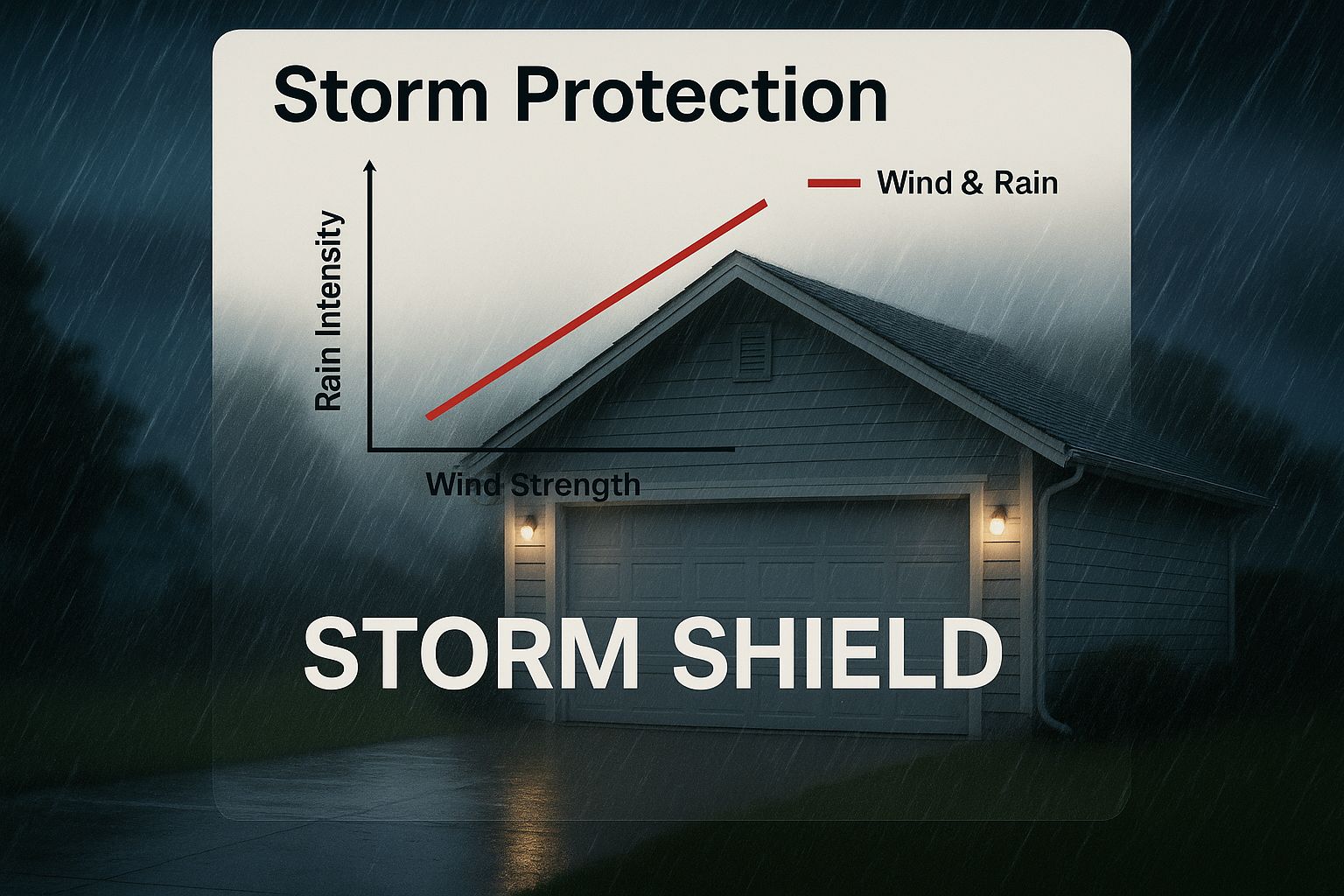
As you can see, reinforcing this one critical entry point is the key to keeping your home or business intact during severe weather.
The Science of a Structural Collapse
This isn’t just speculation; it's proven science. Extensive research from the Insurance Institute for Business & Home Safety (IBHS) confirms that a properly rated garage door is a cornerstone of property protection. Their analysis of storm damage consistently shows that once the garage is breached, the risk of catastrophic failure skyrockets.
Tornadoes, in particular, expose just how vulnerable standard garage doors are, which is why taking proactive steps is so important. Preparing ahead of time is crucial, and you can learn more by checking out a comprehensive tornado response playbook.
A garage door failure can increase the internal pressure on your roof by up to 80%, turning a survivable storm into a total loss. Investing in a wind rated garage door is about more than just meeting a building code; it’s about preventing this entire catastrophic sequence from ever starting.
Decoding Wind Ratings and Building Codes
Looking at the sticker on a wind rated garage door can feel intimidating at first. The codes and numbers seem complex, but they represent one simple thing: how much wind pressure the door is engineered to handle. It's your door's certified defense level.
These ratings aren't arbitrary. They are the result of intense testing protocols, often specified by standards like ANSI/DASMA 108, which account for everything from wind speed and building height to local terrain. Here in Texas and Oklahoma, that rating is your first line of defense.
How WindCode Ratings Work
The most common system you'll see is the WindCode rating, which typically runs from W1 up to W9. Each step up represents a higher level of wind pressure the door can withstand before failure.
A W1 door might be sufficient for a sheltered inland neighborhood, but a commercial facility or home on the Texas coast will almost certainly need a much stronger door, possibly a W8 or higher. It's all about matching the door's strength to the potential threat.
What makes these doors so tough? It's not one thing; it's the entire system working together. A truly wind rated door includes:
- Reinforced Panels: The door sections are designed with extra horizontal bracing (trusses) to prevent buckling under immense pressure.
- Heavy-Duty Tracks: The tracks are made from thicker gauge steel (e.g., 14-gauge or lower) and are anchored more securely to the wall structure.
- Upgraded Rollers & Hardware: Everything from the rollers to the hinges is engineered to handle extreme force without giving way.
You can't just slap a support strut on a standard garage door and call it wind rated. Real protection comes from a complete, engineered system where every component is designed to work in concert.
Let's put some numbers to these ratings to make it clearer. The table below shows the approximate wind speeds that different WindCode ratings are designed to resist.
| WindCode Rating | Design Wind Speed (Approx. MPH) | Common Application Area |
|---|---|---|
| W1 | Up to 90 MPH | Inland regions with low exposure to severe storms |
| W4 | Up to 110 MPH | Areas with moderate wind risk or near coastlines |
| W6 | Up to 130 MPH | Coastal areas or regions prone to strong storms |
| W8 | 140 MPH and higher | High-velocity hurricane zones (e.g., Gulf Coast) |
| W9 | 150 MPH and higher | The most severe coastal regions and hurricane zones |
As you can see, the difference between a W1 and a W8 is significant, highlighting why getting the right rating for your specific location is so important.
Navigating Local Building Codes in Texas and Oklahoma
Building codes are not uniform, especially across states as large as Texas and Oklahoma. The requirements for a home in a hurricane-prone area like Galveston County are dramatically different from those in Oklahoma County, where tornadic winds are the primary concern.
Actionable Tip: Local building codes establish the minimum wind rating you must have. For real peace of mind and resilience, it’s a smart business and personal decision to install a door that exceeds that minimum standard, especially if your property is in an exposed location.
Because these regulations can change from one county to the next, getting an expert opinion is non-negotiable. A professional can pinpoint the exact wind load requirements for your property, ensuring your new door is not only up to code but truly up to the task of protecting your home or business.
To get a better handle on the products that meet these codes, feel free to browse the detailed guides available in our online resources.
The Financial Case for a Wind Rated Door

It’s easy to look at a wind-rated garage door as just another line item in a budget, but that’s a shortsighted view. Think of it less as an expense and more as a crucial investment in your property's durability and your financial stability.
Yes, the initial cost is higher than a standard door. But that upfront investment is your first line of defense against the staggering repair bills that follow a major storm in Texas and Oklahoma.
That higher price tag is a direct reflection of the advanced engineering. The cost for a certified, wind-rated garage door can vary depending on its size, material, and WindCode rating. A single-car residential door might range from $1,200 to $4,500, while larger double-door systems or commercial doors can range from $3,000 to over $15,000, due to the heavy-duty construction needed to withstand immense wind loads.
The True Return on Investment
So, where's the real payoff? It's in preventing catastrophic failure. If a standard garage door gives way during a storm, the resulting damage can be astronomical. We're talking about repair bills that easily climb past $20,000 to $50,000 for homeowners, and exponentially more for businesses facing structural repairs and operational downtime.
That figure often includes a new roof, major structural repairs, and extensive water damage restoration. When you put it in that context, the initial cost of a properly rated door suddenly looks like a smart, preventative measure.
It doesn't stop there. Many insurance companies in high-risk areas recognize the value of these upgrades and offer significant premium reductions for properties with certified wind-resistant features.
Industry Data: A wind rated garage door can lower your annual homeowner's insurance premium by as much as 15% to 25% in some regions. This ongoing saving compounds over time, directly offsetting the initial purchase price and delivering a tangible return year after year.
This makes the upgrade a no-brainer for both immediate protection and long-term financial sense. Our team can walk you through the different materials and ratings to find a door that fits your budget and gives you the protection you need.
Boosting Your Property Value
Beyond storm protection and lower insurance bills, installing a wind-rated garage door is a smart move that adds to your home's equity. In a storm-prone area, prospective buyers see a resilient, code-compliant home as a major plus—it's a powerful selling point. This kind of upgrade has a real impact on overall property value.
Ultimately, the choice boils down to a simple calculation: a manageable, one-time investment now, or the risk of a devastating, unmanageable financial blow later. For homeowners and business owners alike, the numbers point clearly toward proactive protection. Choosing the right door doesn't just safeguard your building; it helps secure your financial future.
Choosing the Right Wind Rated Door for Your Property
Picking the right wind-rated garage door isn't as simple as just grabbing the one with the highest number. It’s a careful balance between your property's actual risk, your budget, and the desired aesthetic. To get it right, you need to look closely at the materials, get a clear picture of your specific vulnerabilities, and know exactly what to ask.
The first big decision is the material. Each one—steel, aluminum, or composite—brings a different mix of strength, upkeep, and looks to the table. For most properties in Texas and Oklahoma, these three are the go-to options.
Comparing Core Materials
Steel garage doors are the workhorse of the industry, and for good reason. They offer the best strength-to-cost ratio, making them a budget-friendly way to achieve a high wind rating. Modern steel doors come in a vast array of styles, including designs that convincingly mimic real wood.
Aluminum doors are lighter but have a major advantage: superior resistance to rust and corrosion, a huge plus in the humid Texas climate. You’ll often see aluminum used in modern homes and commercial buildings with glass panels, which can also be impact-rated to withstand storms.
Composite doors provide the best of both worlds—toughness and major curb appeal. They typically feature a steel frame wrapped in a composite material that looks just like real wood but without the maintenance. They won't warp, crack, or rot, making them a smart, long-lasting investment.
Actionable Tip: While material affects appearance and durability, it's the internal bracing and structural reinforcement that deliver the wind resistance. No matter which material you prefer, always verify the final WindCode rating with your installer.
Why a Professional Site Assessment is Crucial
You can’t guess the right wind load for your garage by looking at a brochure. A professional site assessment is an absolute must, because a handful of factors can dramatically change the force your door will have to endure.
- Building Exposure: Is your building shielded by other structures and trees, or is it in an open field, completely exposed to the wind?
- Local Topography: A property on a hill or near a large lake will experience much higher wind speeds than one in a protected valley.
- Code Nuances: A true professional will know the specific building codes for your exact address, which can be stricter than the general county regulations.
A trained technician will analyze these variables and recommend a door that offers the protection you actually need. This critical step prevents you from overpaying for an unnecessary rating or, worse, installing a door that will fail in a major storm.
Getting a feel for the different residential garage doors available can help you match styles to your home's look and your safety requirements. A professional consultation will then help you zero in on the perfect door for your unique situation, ensuring you get security without having to compromise on style.
Why Professional Installation Is Non-Negotiable
A wind-rated garage door is not just a heavier version of a standard door. It is a complete, engineered system where every component is designed to work together under extreme stress. Its strength comes from the whole package—the reinforced tracks, heavy-duty rollers, and robust bracing—acting as a unified shield.
This is precisely why professional installation isn't just a good idea; it's absolutely essential. You're not just buying a door; you're investing in a sophisticated defense system for your property.
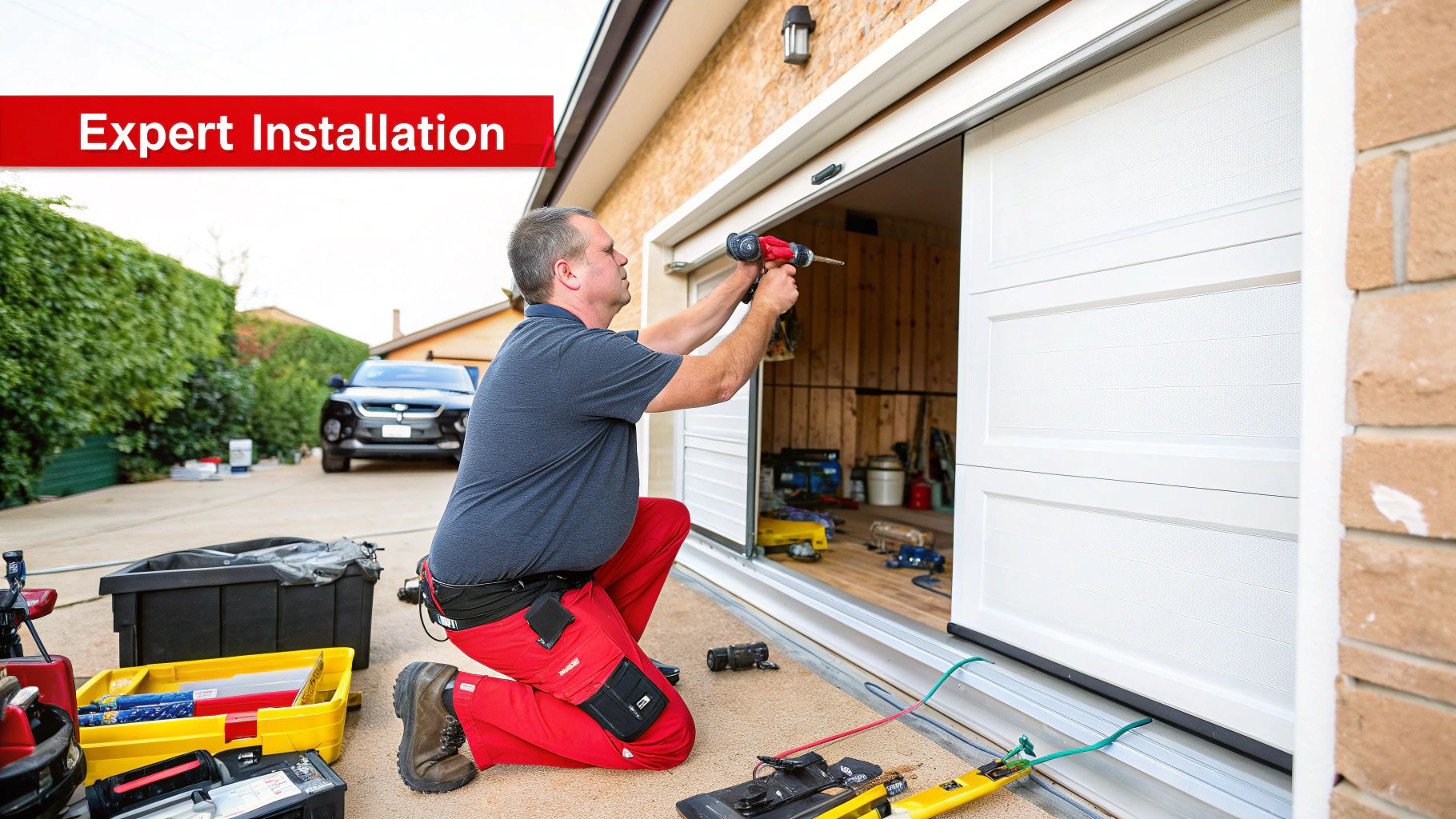
Attempting to DIY a system this complex is a huge gamble. A single track that's slightly misaligned, a bolt that isn't torqued to the exact specification, or a brace that's off by a fraction of an inch can create a catastrophic weak point. When a severe Texas or Oklahoma storm hits, that one tiny mistake is all the wind needs to tear the door apart, rendering your entire investment worthless.
The Dangers of a DIY Approach
Aside from the obvious safety risks, a DIY installation of a wind-rated garage door almost always causes major headaches. Manufacturers have incredibly strict installation specs for a reason, and not following them is a costly lesson.
- Voided Warranties: Nearly every manufacturer will void the warranty if the door isn't installed by a certified professional. This leaves you completely liable for any defects or failures.
- Building Code Violations: Many local codes in Texas and Oklahoma mandate professional installation to pass inspection. A DIY job could easily fail, leading to fines and orders to have it redone correctly.
- A False Sense of Security: This is the biggest risk. You might think your property is protected, but an improperly installed door is no better than a standard one, leaving your family and assets dangerously exposed.
Industry Standard: A wind-rated door is only as strong as its weakest link. Certified technicians are trained to ensure every component, from the torsion springs to the track anchors, is perfectly calibrated to handle the specific wind loads for your area.
Your Role After Installation
Once your door is professionally installed, proactive maintenance is key to keeping it ready for action. A quick check every few months can help you catch small issues before they become big problems.
Simple Maintenance Checklist
- Look and Listen: Run the door and pay attention. Do you hear any unusual grinding, scraping, or squeaking noises?
- Check for Wear: Take a close look at the rollers, cables, and springs. You're looking for any signs of fraying, rust, or obvious damage.
- Test the Balance: Disconnect the opener with the emergency release cord and lift the door by hand to about waist height. It should stay put. If it slams down or shoots up, the springs need professional adjustment.
- Keep it Clean: Use a cloth to wipe down the tracks and the weather stripping to keep them free of dirt and debris.
This simple routine ensures your door is always prepared. To get a flawless setup right from the start, your most critical step is to find a trusted expert for professional garage door installation.
Where Garage Door Storm Safety is Headed
The push for storm-ready homes and businesses is driving garage door technology forward. For property owners in Texas or Oklahoma, understanding where the industry is going makes it clear why investing in a quality wind rated garage door now is such a smart move. We're seeing a big shift toward doors that are not just stronger, but also smarter and more aesthetically integrated.
Innovations in Materials and Design
Much of the progress is in material science. We're moving beyond basic steel to advanced composites and sleek aluminum-glass hybrids. These new materials offer incredible strength without the weight, plus they stand up to dents and corrosion much better. This means you can get a modern, beautiful design without sacrificing an ounce of safety.
Smarter and Stronger Systems
It’s not just about the materials. Smart building integration is quickly becoming a standard feature. Imagine a garage door system that provides real-time data. You could get an alert on your phone because the door's sensors detect a dangerous pressure drop during a storm, letting you confirm it’s locked down without ever going outside.
This isn't a niche trend; it's a huge market shift. The global garage and overhead door market is projected to grow from USD 6.82 billion in 2023 to USD 8.78 billion by 2030. A major driver is the increasing number of building codes in high-risk areas mandating this resilient technology. You can read more about these market dynamics and forecasts to see the full picture.
The future of storm safety is integrated systems. We're talking about advanced materials, intelligent monitoring, and certified strength working in concert. A modern wind rated door isn't just a barrier; it's a responsive part of your building's total defense system.
As these doors get more advanced, the installation process becomes more intricate. This highlights the critical importance of expert technicians. The technology is evolving, and so are the skills needed to install and fine-tune these systems to ensure they perform when you need them most. Investing in a quality door today prepares your property for the future of storm-resilient construction.
Common Questions About Wind Rated Doors
When upgrading to a wind-rated garage door, homeowners and business owners across Texas and Oklahoma tend to ask the same great questions. Getting the details straight is the first step toward making a smart, confident decision.
Can I Just Reinforce My Old Garage Door to Be Wind Rated?
That’s a common question. While aftermarket reinforcement kits exist, they are not a substitute for a door engineered from the ground up to handle high winds.
A genuine wind-rated garage door is a complete system. The integrated bracing, heavier-gauge steel tracks, and beefed-up hardware are all designed and tested to work together as a single unit. Adding a brace to a standard door will not meet local building codes and, more importantly, will not provide the certified protection you need when a storm is bearing down. A complete, new installation is the only way to be sure.
How Do I Figure Out the Wind Rating I Need?
The right WindCode rating for your garage door is dictated by your specific location. A commercial warehouse on the Texas coast faces a different risk than a home in central Oklahoma, so the building codes are far more demanding in those high-risk zones.
Actionable Tip: The best way to know for sure is to check with your local building department or consult a professional garage door company. An expert can assess your property, reference local codes and ASCE 7 standards, and specify the exact wind load requirements you must meet. This removes all the guesswork.
Do Wind Rated Garage Doors Look Bulky or Industrial?
Not at all. This is one of the best things about modern garage door technology—you no longer have to choose between safety and style.
Today’s wind-rated doors look exactly like their standard counterparts. They come in a huge range of designs, materials, and colors, so whether you’re after a classic carriage house style or something clean and modern, you don't have to compromise. All the heavy-duty reinforcement is on the inside, completely hidden from view, so the exterior looks just the way you want it.
Protecting your property starts with the right equipment and an installation you can trust. Overhead Door Co. of Tex-Oma provides certified wind-rated doors and the professional service to ensure your home or business is ready for whatever the weather brings. Contact us today to schedule a consultation at https://ohdctexoma.com.
